White Christmas

thWVGGUOIC  Download    How many times have you heard Bing Crosby sing the original dreary version of this song? And that insane whistling toward the end?  Please stop!! Oh, I know it’s a classic, but that doesn’t mean I have to like it. Such a nice melody – ruined by a singer who seemed half asleep ALL the time. Obviously, I’m not a fan of ol’ Bing.  I did kinda like the movie though.

The movie itself had its problems with casting.  It was supposed to pair up Crosby and Fred Astaire as the two male stars.  After reading the script, however, Astaire declined.  Not enough dancing, Fred?  Then Donald O’Conner was signed to do it, but he dropped out because of illness.  Finally, Danny Kaye filled the spot and demanded $200,000 plus 10% of the gross – and he got it.  The producers were undoubtedly desperate to get this show on the road.

A couple years ago I saw Michael Buble do a goofy, doo-wop version and I loved it.  So I set about arranging it that way as best I could (with Buble’s crazy jazz vocal line) and this is how we do it today – just for fun.  Some people really don’t like it though, so we revert to the sleepy “Bing” style and everybody’s happy.  The trombone ending is worth waiting for… and nobody whistles a note.
There’s No Place Like Home…

thJ53JHUYE  Right-Click to Save    … for the holidays.  “Home for the Holidays” was recorded first by Perry Como in ’54 and then rerecorded by everyone else on the planet.  Great song, and this is a simple arrangement that any singer can pick up on in two minutes.

But this isn’t so much about the song as it is style of play.  I grew up listening to Floyd Cramer and find it hard to keep myself from playing like him.  Floyd was a relatively unknown session musician who played behind some of the greats in the ’50s.  It’s Floyd’s piano in “Heartbreak Hotel” and we all know who did that one.  It was also him playing the signature piano riff in Patsy Cline’s “Crazy”.  The boy cut his chops with some of the best, and was instrumental (no pun intended) in  the development of the “Nashville Sound” of the fifties.

Floyd was a self-taught pianist and invented the “slip-note” style that was his claim to fame.  He would periodically play an out-of-key note and then slip to the correct one – unusual, but addicting to anyone who plays.  To this day I have to concentrate to not do it – I mean, much as I love his sound, EVERYTHING can’t sound like Floyd Cramer – can it?  Hmmmmm…

So I went a little overboard with this Christmas favorite on the “slipped notes” – just to prove a point, I guess.  You can download it with the lead piano for listening, or save the midi off the Christmas list, mute the piano track, and sing it during your Christmas set.  You can listen to Mr. Cramer play his biggest hit (Last Date) on the link below, just to give you a feeling for his style.

http://www.bing.com/videos/search?q=last+date+floyd+cramer+videos&view=detail&&qpvt=last+date+floyd+cramer+videos&mid=B225298360120200B0F5B225298360120200B0F5&rvsmid=B225298360120200B0F5B225298360120200B0F5#view=detail&mid=B225298360120200B0F5B225298360120200B0F5

Santa’s Back in Town

thGNJGQMUJ  Right-Click to Save    If you like jazz, you’ll enjoy this. If you don’t like jazz – you’ll hate it.  The song is “Santa Claus is Comin’ to Town” – in case you don’t recognize it.  Personally, I love playing in a jazz style – mostly because I’m not good or patient enough to play in a “structured” way.  I’m a “hack’ and I know it.

It was first sung on Eddie Cantor’s radio show in 1934 (before my time).  It sold 30,000 copies in 24 hours, so apparently that qualifies as an instant hit.  I grew up listening to Perry Como sing it, then Bruce Springsteen massacred the tune and ruined it for me.

You can’t sing this version, so it goes on the Instrumental Jazz list, or you can download it here.  You might pay attention to the guitar throughout this arrangement – you can’t play the keys that fast for a long period of time so I used the ‘arpeggiator” built into the Yamaha – I love that thing.  It let’s you pick and sustain notes indefinitely…which is heaven-sent for a lazy keyboardist like me.  I used 8 tracks for this one – piano, bass, drums, organ, marimba, synth brass, tenor sax, and that lovely guitar.  It all comes together for a nifty, though different, combination – unless, of course, you don’t like jazz.

Have Yourself a Merry Little Christmas

thEGZLR5RM  Download    This is another Christmas favorite that we do every year.  It was first sung by Judy Garland in the MGM musical Meet Me in St. Louis in 1944.  The lyrics had to be re-written because they were just too depressing and rather morbid.  The first two lines originally were, “Have yourself a merry little Christmas – it may be your last”.  What?  Don’t say that!  I’m glad Hugh Martin agreed to change the words,  though he didn’t want to.

Anyway, this is the arrangement we use.  I thought harmonica fit nicely for a lead line, with a little sprinkle of vibes and a jazz guitar on top.  I’ve done two different versions on the Christmas song list – this is number 1.  Number 2 is considerably more upbeat (I might have been drinking that night).  Oh… and have yourself a merry little Christmas –  from the Zobrist household.

Santa Baby

thA7M7R4ZZ  Right-Click to Download    This Christmas tune has been recorded by every singer from LeAnn Rimes to Madonna to Homer & Jethro (go figure that one).  The original recording was done way back in 1953 by the one and only Eartha Kitt.  It was a huge hit for her so she re-recorded it 10 years later with a more uptempo arrangement (if something works just keep trotting it out there, I guess).  Madonna’s popular rendition in 1987 was based on Kitt’s latter version.

Since Madonna has the moral turpitude of a snake, we elect to perform this song in the original Eartha Kitt style – besides, it’s more fun and Karen gets to use her “Betty Boop” voice.  If you’re lucky enough to have a Yamaha workstation keyboard, use the “voice oohs” setting on track 14…. the backup vocals are surprisingly realistic.  Of course, if you have three backup singers you won’t need that.  This one is primarily for single performers, so get your best “Betty Boop” in gear.  Great song…

The Christmas Song

thGYMI0Z20  Right-Click to Save    I put a jazz Christmas CD together about two years ago, and shared it with a few people (and one dog) last year with folks  I thought would get a kick out of it.  However, I’ve since discovered that my sequences are now all over the internet – with no credit to me.  Can you say “copyright”?  Apparently, I can’t.

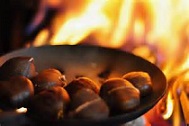
No matter.  This season I’ll share my jazzy Christmas tracks with everybody and anybody.  Singers can use these arrangements in their own holiday sets and I’ll be honored if they do.  “Chestnuts Roasting on an Open Fire” (The Christmas Song) has become a classic – written by Mel Torme and recorded by the Nat King Cole Trio in 1946.  This arrangement is nothing like the original (I heard it by someone several years ago), but works as a nice jazz piece around the holidays.   My piano lead gets a little carried away, but when the beat is there ya gotta go with it.  Backup midi tracks are on the Christmas list.

Superstar

th4YXSKWAR  Right-Click to Save    I would never, ever perform this song.  And I wouldn’t play behind a singer who wanted to do this song.  So there.  It’s the lyrics – actually only one line that ruined it for me, and that is “Baby, baby, baby, baby, oh, baby”.  I mean, come on – somebody couldn’t come up with more words than that for a crucial line in the chorus?  I made fun of it for years.

Of course, the Carpenters have the best-known version.   It was first recorded by Delaney and Bonnie, who did it in a very “bluesy”style – never a hit for them.  Then Bette Midler gave it a shot… no good (must have been that “baby” line).  Richard Carpenter heard Bette perform it on the “Tonight Show with Johnny Carson” and decided he wanted to cover it.  Karen Carpenter didn’t like the tune (had to be that line) but, after hearing Richard’s arrangement, she came around.

I didn’t pay much attention to orchestration before I started writing backing tracks for singers.  Now I don’t listen to lyrics anymore.  “Superstar” has great instrumentation – violins, piano, french horns, harp, oboe, and an entire brass section.  Quite a challenge to work all that in and still have a workable piece for a single performer or small combo.  Now I’m gonna rewrite that stupid line myself…… baby.

Teach Me Tonight

Stage_Spotlight  Right-Click to Save    This is a blue light special at K-Mart. What I mean is, do this song in the middle of the third set, lights down onstage except for beautiful blue spots on the singer.  Dramatic and subtle at the same time.  Just a suggestion…

This one has become a jazz standard and was first recorded by “The DeCarlo Sisters” (who?) in 1954.  The 78 RPM record of them doing the song is considered quite the collector’s item.  A guy with the unlikely name of “maynardcat” found a unique way to show off his record (click link below).  Those were the days.

This should be a simple song with not too much instrumentation, so I might have mucked it up a bit with the violin track.  Of course, you can always mute that track if you agree that I got carried away.  It’s on the jazz/swing list.  And don’t forget the blue spots….

http://www.bing.com/videos/search?q=teach+me+tonight+the+decastro+sisters+video&FORM=VIRE15#view=detail&mid=05E735C7B5C248EDF9D505E735C7B5C248EDF9D5

My Girl

thT7LFN57M  Right-Click to Download    Oh, boy… The Temptations! Harmony doesn’t get any better than this.  This one was their very first number-one hit, which was an emotional blow to Eddie Kendricks, their lead singer.  David Ruffin was recruited from background vocal status to sing the lead and pretty much took the job away from Kendricks for the rest of their career.  Ruffin’s voice was more mellow with a kind of gruff edge that worked extremely well with the Temptation’s style.  Sorry, Eddie…

The six ascending guitar notes at the top are most notable because they are a perfect example of a C major pentatonic scale, played exactly from octave to octave.  I always thought the beginning bass riff prior to the guitar was the “signature” part of the song, but what do I know?  I think when you hear the bass you say, “Hey, that could be My Girl” – then, when the guitar arrives, you know you were right.

If you’re a single performer out there using backing tracks, you can pay a hefty price for a professional sequence for “My Girl”, or you can use mine for free.  I’m not quite good enough to get the violins just right (especially in the middle eight), but who’s gonna notice?  No one yet has come up to us and said, “You know those strings aren’t quite right in that middle part there”.  But they will now….

Fever

th4B9YW0K3  Right-Click to Save    This tale of oh, so passionate love was first recorded by a man by the name of Little Willie John. He was a major influence on R&B singers in the ’60s but nobody much knows about him today… maybe because he stabbed a man to death and died in prison at the tender age of 30…. that’ll kick your career in the butt.

Of course, the most famous version of “Fever” belongs to Peggy Lee.  She recorded it in 1958 and the lyrics were considered quite racy at the time… hence, its popularity.  I always thought her rendition was pretty boring, except for the finger-snapping (cool).  So our performance of the song runs more along the lines of Micahel Buble.  It’s a little weird, but interesting, I think.  The backup tracks are on the Jazz/Swing list.