Green, Green Grass of Home

thNATNPUR0  Right-Click to Save    Tom Jones had a worldwide hit with this in 1966, although it was first recorded by Porter Wagoner the year before.  It’s about a man who returns to his childhood home after many years.  As he steps down from the train, his parents are there to greet him and his beloved Mary comes running to join them.  With Mary, he strolls at ease among the remnants of his childhood, including “the old oak tree that I used to play on”.  And he pontificates that “it’s good to touch the green, green grass of home”.  Sounds wonderful, doesn’t it?  However, the music and words are hinting that something isn’t quite right here.

The third verse switches abruptly to speech rather than singing – “Then I awake and look around me, at four grey walls that surround me”.  He realizes he was only dreaming and, in fact, he’s on death row in a prison.  He’s awakened on the day of his execution – “There’s a guard, and there’s a sad old padre, arm in arm, we’ll walk at daybreak”, and now we know he’s returning home to be buried ‘neath that old oak tree.  Very sad, and cleverly written.

Whenever we do this song, it brings a lump to my throat and I can barely sing it.  It was a favorite of my brother, who passed away many years ago.  Steve… this one is always for you.  I miss him.

You Belong to Me

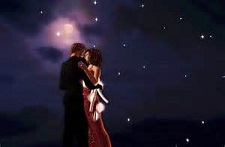
Pyramids-at-Sunset-Cairo-Egypt2  Right-Click to Save    At any given moment, you’ve got a song in your head. Oh, you may not be conscious of it – but it’s there – churning away the rhythm of whatever you’re doing. You may have heard it on the radio 30 minutes ago, or maybe it’s an old favorite, or perhaps you heard a repairman whistling a certain tune and you stole it from him. You can’t help yourself… you’ll suddenly be humming that melody and you can’t get it out of your head – until the next tune comes along.  The song I most often hear (when I’m paying attention) is “You Belong to Me”.  I’ll burst out with “see the pyramids along the Nile” for no reason at all…. but I’m a little strange anyway.

You Belong to Me was first recorded in 1952 by Sue Thompson (who’s that?) on a country label (groan).  Then Patti Page gave it a shot (not good).  Then, at last, Jo Stafford did a cover version and it became the hit it was meant to be.  And The Duprees had a bebop hit with it in 1962.  This is our arrangement and Karen does a mighty fine vocal of this old standard.  I used an ocarina for the melody line, but a “chick singer” works much better.  Download the midi off the Pop/Rock list.  Musicians, this should be in your set list – that’s an order.

What Goes On?

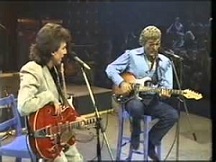
thED2K3AX1  Download with Lead   This tune was released by The Beatles in 1965 and was considered their first venture into country music.  It was written by Lennon and McCartney, but Ringo had a hand in it too.  He always says he only wrote five of the words and hasn’t done a thing since (probably true).  George Harrison idolized Carl Perkins, and you can easily recognize Carl’s style in George’s lead guitar on this song (that’s Carl and George together in the picture above).

It was recorded in one take with overdubs in the studio.  If you go back to the original recording, you can hear Lennon say something and they just left it in.  After the lead break when Ringo sings “Tell me why”, John muttered “We already told you why” – which was a reference to the song “Tell Me Why” recorded a year earlier.  Just a fun fact, folks…. bear with me here.

What I like about my arrangement (and I do like my arrangements)…{smart ass}… is the ability of my keyboard to imitate backup vocals.  If you listen carefully, you can hear the “ooohs” behind the lead organ.  If you have backup singers, just mute tracks 3 and 4 – but if you’re singing by yourself, mute the organ (track 2) and leave the backups (like you wouldn’t know that).  Try it at your next gig (it’s on the Country list).  It’s different and fun.  If they boo you off the stage, don’t blame me – you didn’t do it right.


Peace in the Valley

6f69b237f7813b404d1456759d138dc4  Download     This song, originally written for Mahalia Jackson, was a hit for Red Foley and the Sunshine Boys way back in 1951.  When Elvis covered it in 1957, it became a classic country-pop favorite.  I like the Elvis rendition, so I loosely based my arrangement on his (I have no shame).  I included a harmonica solo in mine cause I thought it fit the mood.  Elvis NEVER gave his musicians a solo… what a schmuck!  But a talented schmuck, nonetheless.  I also channeled Floyd Cramer on the piano style (grew up listening to him).  I guess I’ve never had an original thought of my own…

I’m including this sequence in the country file for singers who might want to perform it.  However, I’m also using this great tune to introduce my new “Sacred/Gospel” category.  My Yamaha has some really nice sounds suited for religious and gospel music and it’s time I started using them.  I lean more toward the traditional Christian music, so don’t go in there looking for “comtemporary” files – not my style.  I can’t help giving some of these songs a kind of “jazz feel” (it’s in my DNA).  So don’t get mad if you hear an old favorite done like you’ve never heard before.  If you like it, download it for your collection.  If my interpretation isn’t your cup of tea, don’t tell me.  I tend to burst into tears when criticized…


Please, Mister Postman

thWLL0ID09  Download with Lead    I always thought this was a Beatles song and it was one of my favorites.  Paul and George had wonderful, clever backup vocals, and John Lennon on lead was just – well… John (the best rock’n’roll voice of all time).  But, in truth, they only covered the song – as was the case with a lot of the tracks on their first two albums.

This song was actually the debut single by The Marvelettes (warning… girl group) in 1961. “Mister Postman” was the first Motown recording to reach number one on the Billboard Hot 100 list.  It soared to number one on the R&B charts as well.  Then the Beatles covered it in ’63 (by far the best version) but, in 1975, The Carpenters again took it to the top of the Hot 100.  Obviously, this tune has a lot of mileage on it, but we’ve decided to work it into our repertoire as an “oldie”.  My arrangement is kind of a combination of  The Beatles and The Marvelettes  (Beatlettes?).  If you’re interested in performing it, best if you have at least three singers or a harmony box.  The sequence is on the Pop/Rock list without the lead.  Feel free to download and use my version if you like… my lawyer won’t call your lawyer, I promise.

Teddy Bear

th1C0KGTLA  Download with Lead    Everybody can sing like Elvis… at least they think they can. Why else would there be so many impersonaters? And don’t tell me you haven’t chortled “Love Me Tender” at least once in the shower.  But I’m here to tell ya nobody sings like “the King”.

“(Let Me Be Your) Teddy Bear” reached No. 1 on the charts for 7 weeks in 1957.  Elvis recorded it for the soundtrack of his 2nd movie Loving You.  This was the first time he was actually the star of a movie.  In 1956, he had a supporting role in Love Me Tender, which apparently  impressed the right Hollywood people who thought Elvis should be a film star.  Personally, I’d rather have him sing than act – but that’s just me.

Download the song off the Pop/Rock list without the lead and sing along in the shower.  You’ll sound just like Elvis, I’m sure.

Stars Fell on Alabama

thGUM91GI3    Jack Normand was a friend of mine.  I met him when I was a senior in high school and he influenced my entire music career, such as it was.  Jack was the “music man” at the Grand Hotel (when it really was a grand hotel), where he and his band performed in the dining room and lounge for upwards of 40 years.

Jack and the band were popular in New Orleans when they were contracted to play at the opening of the Grand Hotel in Point Clear in 1941.  They stayed for six weeks but missed the excitement of the “Big Easy”.  They ended up playing back and forth between the two locations for the next ten years.  Finally, Jack and his family moved to Fairhope in ’51, and the rest is history.

Sitting in the living room of his home one night, “jamming” with him and his kids (all musicians), he told me, “Dave, you can play the heck out of that accordion (I was playing an electronic accordion at the time)…. but if you want to make any money in the music business, you must play piano”.  That was good enough for me – I immediately crossed over the dark line into piano lounges and weddings and nightclubs.  No Zydeco bands for me!

Years later, when I’d go back to the hotel for a visit, Jack was always interested in what I was doing and where I was playing.  He’d even let me sit in for a number or two, which thrilled me to no end. I loved the guy.  He had a grace and dignity about him that is rare in a human being.  And the man could play a piano like nobody’s business.

Jack died in 1990, and they say his ghost still haunts the Grand Hotel.  He ended every evening with this song – “Stars Fell on Alabama” (this is my arrangement, Jack played it much better).  They say when it’s late night, and the wind is just right, and you listen very carefully – you can hear Jack playing this melody from somewhere far away….. oh, I hope so.

Witchy Woman

121129__witchy-woman_p  Download with Lead    One more Halloween song before the big night… if you don’t mind.  Of course,  everyone knows “Witchy Woman”was a big hit for The Eagles written by Don Henley for their debut album (it was the only song on the album featuring Henley on lead vocals).  But did you know that there was a real life “witchy woman”?

Zelda Fitzgerald is the prime suspect.  Henley had read a biography of her life and consequently used her as the model for the song.  She was the wife of famed author F. Scott Fitzgerald (The Great Gatsby) and was known to be wild, bewitching, and mystifying – much like my first wife (kidding).  Zelda is portrayed as the character Daisy Buchanan in Gatsby.  Now you’ll have to go back and read the book again.

At your Halloween music job, I guarantee you’ll have at least three women dressed as a witch.  Drag ’em out on the dance floor (physically if you have to) and feature them with this song.  It’s on the Halloween list.  Thanks, Zelda, for being such a witch!


Cold, Cold Heart

th2XV6WXQV  Download with Lead    I’ve always loved the chord changes and lyrics to this song, but I never much cared for the Hank Williams “cowboy” version.  I know… it’s a classic.  But sometimes the original isn’t always the best.

Hank used to say that this tune “bought me and the boys quite a few beans and biscuits”, and I’m sure it did.  Recorded in 1950, it sailed to the top of the country charts even though it was released as the B-side to another, lesser, song (Dear John).  The impetus behind it was his wife, Audrey.  Seems while Mr. Williams was on the road she sort of slept around – a lot.  ‘Course, so did he – so what’s a person to do?  Anyway, she got pregnant by another man (imagine that in 1950) and tried to perform an at-home abortion – which went very wrong.  In the hospital recuperating, Hank went to see her and she threw him out, maintaining this was all his fault (uh…okay).  He went home and told the housekeeper that Audrey had a cold, cold heart and a light bulb went off.

I finally heard an arrangement of the song I really like.  Norah Jones put a jazz touch to it in 2002 and that’s the way we do it today.  I tried to get as close to Jones’ instrumentation as I could and Karen does a splendid job with the vocals.  So can you… it’s on the jazz list without the lead line (midi or MP3).  Work it up and give it a shot on your next hotel lobby gig.

Halloween Theme

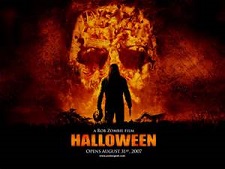
thKVZYKWVY  Download MP3    On the night of All Hallows’ Eve, you need a little something spooky to run through your PA system just before you take the stage…. just to set the mood. The theme from the movie “Halloween” is perfect.

The original film (1978) was written and directed by John Carpenter and was about a maniac (Michael Meyers) who lurches around killing teenage babysitters for fun.  Carpenter also wrote the theme song, choosing to use a simple piano melody as the primary theme and building from there.  The melody uses dissonant notes and is in 5/4 rhythm that somehow creates the proper atmosphere for the film.  It’s relatively simple and has no symphonic qualities to it at all – as opposed to most movie scores.

Give yourself three minutes to get situated onstage as the theme plays and starts to fade, then up with the lights and launch into your opener.  The rest of the night is up to you.