New San Antonio Rose

thKSJD73AO  Right-Click to Save    Do you need a toe-tapper?  Even if you’re performing hip-hop (I sincerely hope not),  every now and then you need to throw in something completely different.  Something that makes people think, “Oh, that’s fun!”.  This classic country tune would be the one.

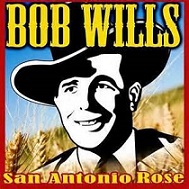
Bob Wills recorded “San Antonio Rose” as an instrumental in 1938.  He came from a musical family in Texas (father was a champion fiddle player – mother an accomplished pianist), so he naturally gravitated toward music as a career.  His band ( the Texas Playboys) wrote lyrics to the tune and it became “New San Antonio Rose” –  soaring to number one on the “Western” charts and staying there for a very long time.  Other versions became popular later on, most notably Floyd Cramer’s piano instrumental in the ’60s (which I’m trying to emulate here – to no avail).  This is the way I prefer to do it (duh),  but it’s got some pretty good lyrics so don’t be afraid to hand it to your singer.

When Wills and his band performed it at the Grand Ole Opry with horns and drums, it caused quite the controversy.  Seems the Opry people didn’t think those instruments belonged in a country-western band.  Could be they were right.
She Thinks I Still Care

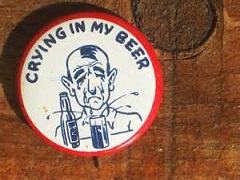
th32M2Z1XC  Download Instrumental    In my sophomore year of college, I played a solo gig at a VFW in downtown Terre Haute, Indiana. It was a sudden introduction to country music and I had to learn a bunch of country tunes really fast. It was also the first time I’d seen anyone actually “cry in their beer”.  People really do that, you know.  You don’t see it often, but when you do it kinda sticks in your brain.

I loved playing that club.  I can still see couples swaying on the dance floor to this song by the great George Jones (my backing tracks are on the Country List if you think you’d like to trot this one out again).  I played a similar arrangement to this way back when – but then I didn’t have the luxury of a multi-track keyboard that could mimic every instrument.  I’d give anything to go back there and do it right – harmonica, guitar, fiddle – the whole works.  You couldn’t give this song justice as a solo piano player, but they still danced and cuddled and swayed and…. cried in their beer.   Good times.

Green, Green Grass of Home

thNATNPUR0  Right-Click to Save    Tom Jones had a worldwide hit with this in 1966, although it was first recorded by Porter Wagoner the year before.  It’s about a man who returns to his childhood home after many years.  As he steps down from the train, his parents are there to greet him and his beloved Mary comes running to join them.  With Mary, he strolls at ease among the remnants of his childhood, including “the old oak tree that I used to play on”.  And he pontificates that “it’s good to touch the green, green grass of home”.  Sounds wonderful, doesn’t it?  However, the music and words are hinting that something isn’t quite right here.

The third verse switches abruptly to speech rather than singing – “Then I awake and look around me, at four grey walls that surround me”.  He realizes he was only dreaming and, in fact, he’s on death row in a prison.  He’s awakened on the day of his execution – “There’s a guard, and there’s a sad old padre, arm in arm, we’ll walk at daybreak”, and now we know he’s returning home to be buried ‘neath that old oak tree.  Very sad, and cleverly written.

Whenever we do this song, it brings a lump to my throat and I can barely sing it.  It was a favorite of my brother, who passed away many years ago.  Steve… this one is always for you.  I miss him.

What Goes On?

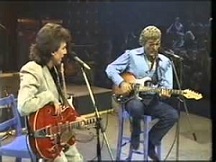
thED2K3AX1  Download with Lead   This tune was released by The Beatles in 1965 and was considered their first venture into country music.  It was written by Lennon and McCartney, but Ringo had a hand in it too.  He always says he only wrote five of the words and hasn’t done a thing since (probably true).  George Harrison idolized Carl Perkins, and you can easily recognize Carl’s style in George’s lead guitar on this song (that’s Carl and George together in the picture above).

It was recorded in one take with overdubs in the studio.  If you go back to the original recording, you can hear Lennon say something and they just left it in.  After the lead break when Ringo sings “Tell me why”, John muttered “We already told you why” – which was a reference to the song “Tell Me Why” recorded a year earlier.  Just a fun fact, folks…. bear with me here.

What I like about my arrangement (and I do like my arrangements)…{smart ass}… is the ability of my keyboard to imitate backup vocals.  If you listen carefully, you can hear the “ooohs” behind the lead organ.  If you have backup singers, just mute tracks 3 and 4 – but if you’re singing by yourself, mute the organ (track 2) and leave the backups (like you wouldn’t know that).  Try it at your next gig (it’s on the Country list).  It’s different and fun.  If they boo you off the stage, don’t blame me – you didn’t do it right.


This Kiss

cute-babies-kiss-pictures-images-wallpapers-photos-02  Download with Lead    I don’t like this song.  But I’ve received several requests for a backup sequence from my “country” friends out there, so here it is.  It was painful listening to it over and over until I got the guitars just right, but it’s finished – as good as I can do it.  It’s hard making a keyboard sound like a guitar without it sounding like a keyboard trying to sound like a guitar.  Confused?  Me too.

I have absolutely no problem with Faith Hill.  She’s a pretty lady with a great voice and a true talent…. and I understand she has a little money.  It’s just this song – ugh.  Maybe I heard it too much.  Other people love it, so I’m just weird, I guess.  Anyway, download off the country list if you just insist on performing it (it’s almost 20 years old, you know).  I used a flute on the lead line – an obnoxious way of protesting a less than stellar tune.

Things you Learn at Cracker Barrel

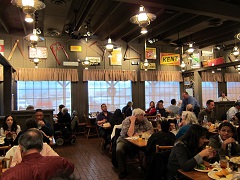
cracker-barrel-albuquerque-inside  Download    I had breakfast with my Dad this morning.  Through mouthfuls of biscuits & gravy from the “Old Timer’s” breakfast, he said, “Ya know what song I like?  Bet you never heard of it”.  Always up for a challenge, I replied, “Try me”. (clever, huh?)  He came up with something called “For All We Know”.  I thought it was the one The Carpenters did, but he insisted they must have stole it.  After he hummed a few bars (sort of) I realized that it did ring a faint bell.  I wanted to point out just how old that song must be, but he was buying – so I dropped the subject.

Well, it stuck in my head and I thought it might make a good old song for a nostalgic set on stage.  I did a little research online but found practically nothing on that particular piece.  I might point out there was plenty of information on The Carpenters song.  Then I found some sheet music and a recording of somebody named Barbara Law singing “For all we know, we may never meet again”.  That was it!  I jumped on my handy sequence maker (Yamaha keyboard) and cranked out a version I believe a singer could use. Thanks, Dad.


Crazy

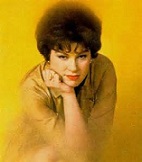
th25OLI37E  Download Here    She died in a horrendous plane crash at just 30 years old.  Patsy Cline, born Virginia Patterson Hensley in September of 1932, was part of the early 1960’s Nashville Sound – which was a subgenre of country music, replacing the honky-tonk style of the ’50s.  She was known for the intense emotion she put into a song, and for her rich contralto voice.  When she was 13, she was hospitalized with rheumatic fever.  “The fever affected my throat and when I recovered I had this booming voice like Kate Smith”.  Kate Smith wishes…

Patsy’s string of hits began in 1957 with “Walkin’ After Midnight” and ended in 1963 with “Sweet Dreams”.  This song, “Crazy” was somewhere in the middle of all that and is still a crossover standard today.  You’ll hear it performed at the finest night clubs and in the lowliest of local “dives”.  I found this sequence hidden away on an obscure website and thought it most closely resembled the original recording.   I had to completely redo the piano track, but the rest of it was near perfect.  I used a tenor sax on the lead line as it sort of mimics her sultry voice.  Here’s to Patsy Cline – taken away from us much too soon.