Sh’Boom (Life Could Be a Dream)

thSZAJZ56V  Right-Click to Save    “Hey nonny ding dong, alang alang alang, boom ba-doh, ba-doo ba-doodle-ay”.  Okay, the opening lyrics to this tune are just plain goofy, but they’re fun and that’s what this song is all about.  If you’re looking for a cute little ditty that’ll entertain your audience and make them tap their feet, this one never fails.  We started doing “Sh’Boom” about fifteen years ago and it made me go buy a vocal harmony processor to have even more fun with it.  Even young crowds liked it and I always got a smile from the club manager – and that’s a good thing.

“Sh’Boom” is an early doo-wop song written in 1954 by members of the R&B group The Chords.  The song was also recorded that same year by The Crew Cuts and that version became the mainstream hit.  It stayed #1 on the charts for nine weeks and has been covered by, well… almost everybody.  It is the quintessential example of what doo-wop was all about – one lead vocal and 2 or 3 backup singers doing tricky things behind the lead.  This kind of music just makes me happy – and there’s not a word about beating up women or killing cops.  In case you hadn’t noticed, I hate hip-hop… doesn’t make me the least bit happy (just an aside).

So trot this one out to your younger crowds (the older ones already know and love it).  This is a long arrangement but it’ll keep your people on the dance floor for awhile.  I used flute and trombone on the first two tracks for vocals, but mute those tracks and there’s plenty of room for two or three or four singers to doo-wop themselves all over the place.  And remember… life can be a dream – if you do it right.

(Pop/Rock list)

An American Trilogy – Elvis

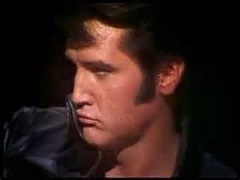
troopgraphic  Download    Memorial Day weekend is a good time to introduce this arrangement I’ve had sitting in my files for months….. just had to tweak it a little.  This was arranged by country songwriter Michael Newbury and made popular by Elvis when he began including it in his shows in the 1970’s.  It was always a showstopper, and Elvis most times teared up when he sang it – he was a patriot and loved his country.  That is something more people need to feel today.  I am so tired of hearing the tired drum of idiots who for some reason hate what America stands for and want to change it forever.  Shame on you!

I used a flute for the lead, which is the only instrument on my keyboard that can cut through all the instrumentation.  Elvis would not be pleased.  If you’re a singer without a band and you’ve got the chops, this is a pretty good backup for this wonderful composition.  If you can handle this, I envy you.

Day Dream

th241X5AS6  Download    This is us doing that great John Sebastian tune “What a Day for a Daydream”.  Sebastian grew up listening to folk music in the Greenwich Village section of lower Manhatten and eventually  formed his group “The Lovin’ Spoonful” in 1964.  Their first gig together was so bad the manager told them to go away and practice.  Obviously they did, because the Lovin Spoonful had numerous hits through the 60’s which are still played today.  Apparently that’s true – we’re even still doing them.  “Day Dream” has always been one of my favorite songs to perform.

At the peak of their success, the producers of the television series The Monkees wanted to base their program around the Lovin’ Spoonful but dropped the band from the project due to song publishing rights.  That’s too bad since not one member of The Monkees could play a musical instrument – they were all actors!  Their whole career was a sham, but that’s Hollywood.  The “Spoonful” were the real deal, largely because of Sebastian’s songwriting ability and smooth vocals.

I based our arrangement largely on the original, but I wanted something different in the middle.  So I worked up a kind of Dixieland solo that some people might consider odd – but consider the source.  And the whistling at the end isn’t either one of us – the keyboard has a pretty good “whistle” sound.  The ending is kind of abrupt, but it can be faded out.  It’s a live recording, so I couldn’t tweak it.  Singers, if you like this sequence, feel free to download the midi backing tracks from the Pop/Rock list.  Won’t cost you a dime – I’m just that nice.


Jambalaya

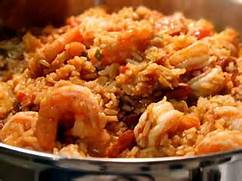
th7U5DT7DD  Download Here    Definition of “jambalaya”: a spicy dish of rice usually cooked with ham, sausage, chicken, shrimp, or oysters.  Yum!  That makes me want to put some together this weekend with sausage and chicken.  Good eatin’, folks.

But jambalaya isn’t just great food…. it’s also great music…. and fun.  That’s why almost every singer on the planet has recorded the song.  Hank Williams did it first (since he wrote most of it), then Jo Stafford (just silly), then Brenda Lee (her first single), and a slew of other artists from Fats Domino to The Carpenters.  Even Elvis thought it was worth a track on one of his live albums.

I’ve done this song for years – since it was written, I think… but I’m not tellin’ when that was.  Always the same way… that ol’ Cajun two-step that really requires an accordion and a washboard, but we heard a rockier (is that a word?) version a few years ago and have been doing it that way ever since.  Try our version the next time you perform the song.  If you’re not having fun with it, you’re not doing it right.

(Country List)


Always On My Mind

thXGLP4EGT  Right-Click to Save    “Maybe I didn’t hold you – all those lonely, lonely times – I guess I never told you – that I’m so happy that your mine”.  Awfully sweet lyrics for an old scruffy cowboy like Willie Nelson to sing.  But sing it, he did, and won himself a Grammy in 1983 for Best Male Country Vocal Performance.  I always thought it was the best song Willie ever recorded.

“Always On My Mind” was first recorded by Brenda Lee in 1972, but languished on the charts at #45 for weeks.  Then Elvis picked it up and some say it was his finest recording ever.  I would beg to differ – I think he recorded it too fast – taking away from the soulful mood of the composition.  He had many other recordings that were so much better.  I can’t imagine this one being voted his best…. it just isn’t.

It was Willie Nelson who finally injected some real “feeling” into the tune, and a great deal of sadness.  Our arrangement here is loosely based on Willie’s – begin with just piano and lead vocal, then subtly bring in the band at just the right moment.  It’s kinda fun to watch a dance crowd on this one.  They sort of meander around the floor for the first 16 bars, not really sure why something doesn’t feel quite right (don’t they know there’s no bass or rhythm yet?).  But when the rest of the music pours in like fine wine, they suddenly move in sync like somebody turned on a switch.  Like I said – fun to watch.  If this isn’t in your repertoire – well, shame on you.  Work it up!  It’s pure, beautiful romance in music form – not to be ignored.

(Country and Jazz-Swing list)

In Other Words?

thPJJ153C8  Download with Lead    In 1954, a chap named Bart Howard was working as a piano player in a New York cabaret.  He’d been in the music business twenty years and was still pounding away as an accompaniest for those pesky, ego-inflated cabaret singers who looked down their noses at mere musicians.  They were the real stars of the show, after all.  I feel his pain – I’ve worked with vocalists with just that attitude.  But our Mr. Howard penned a song this particular year that set him up for life.  He called it “In Other Words”.

Kaye Ballard was the first to record “In Other Words”, followed by the likes of Johnny Mathis and Nancy Wilson.  Peggy Lee made it even more popular in 1960 when she sang it on The Ed Sullivan Show and she eventually convinced Bart Howard to change the name of the song to …  you guessed it (if you’ve been listening to my version above)… “Fly Me to the Moon”.  Of course, Sinatra made it huge in ’64, accompanied by the Count Basie Orchestra and arranged by Quincy Jones.  This is one of those songs that improves with age and better musicians.

“Fly Me” was used in numerous television shows and movies.  In the TV series WKRP in Cincinnati, Jennifer’s doorbell played the song.  Tony Bennett performed a parody of it on Sesame Street when “Slimy the Worm” took a trip to the moon (okaaaay).  Sinatra’s version became closely associated with the NASA Apollo space program.  It was the first music heard on the moon when Astronaut Buzz Aldrin broke out his portable cassette player when he first stepped out on the lunar surface.

So if you’re looking for a standard jazz piece to perform onstage, you might want to try our version of “Fly Me to the Moon”.  Singers, you’ll get your key from the two single piano notes at the top  (E octaves).  Subtle, huh?  Pay attention to the playful flute on track 3… very cool, I think.

(Jazz-Swing list)

To Speak or Not to Speak…

thO267HAWA  Download

 … that is the underlying question if you perform this song on stage.  “Are You Lonesome Tonight” is a perfectly lovely ballad just as it is… without any talking, please.  Elvis chose to “speak” and I wish he hadn’t.   His soliloquy in the middle of this song was borderline corny and completely unnecessary.  But, once again… that’s just me.  I haven’t had any number one hits lately.  Elvis would give me one of those “what the hell do you know” kind of looks if he were around today.

But it’s not entirely his fault.  He was convinced to record “Lonesome” by Colonel Tom Parker (manager) in 1960 as a way to showcase the expansion of his vocal range while he was in the Army.  It was also Parker’s wife’s favorite song.  The ballad was written in 1926 by a couple of vaudeville performers who thought the schmaltzy spoken bridge would be funny.  Al Jolson recorded it the following year and “hamboned” the spoken part, while other singers over the years recorded it with and without the “all the world’s a stage” speech.

Elvis recorded it in a completely dark studio in order to create the right mood.  He was certain he couldn’t do the song justice, but he nailed it on the second take – in the dark – at 4 AM – and with the spoken bridge.  The “Jordanaires”, his backup vocal group, are just plain beautiful behind the “speech” and that’s all I ever really listened to while Elvis rambled on.  Also at that recording session were Floyd Cramer and Chet Atkins  – that didn’t hurt either.

Now, if you’re a performer who uses backup tracks (the whole reason for this site), you might not have the Jordanaires behind you – so just  sing the song straight through so you don’t look silly talking to yourself onstage.  This arrangement is perfect for a slow dance that everyone loves and you don’t have to call a whole lot of attention to yourself.  However, if you insist on talking, there’s room for that too.  I used violins for a solo in the middle and you can just let ’em dance their little hearts out – and not utter a word (I really hope you don’t).  Just sing it pretty…

(Pop/Rock List)

Easier Said Than Done

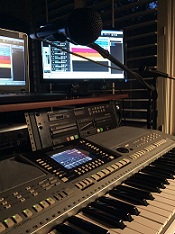
IMG_0398  Download    I’ve had several people ask lately what kind of equipment I use and how so many instruments can spring from one keyboard.  I thought the jazz tune “Easier Said Than Done” would be appropriate for this subject.  This one is on the Jazz Instrumentals list or download it from this post.

Synthesized instruments and the use of “sampling” have been around for quite a while, but the process just keeps getting better and more realistic.  Engineers actually record instruments (saxophones, violins, trumpets, etc.) and then adapt those “samples”  to work on higher end keyboards.  You can never recreate the sound of, say, a violin just exactly right –  but as technology progresses, so does the quality of those sounds.  Through a process called “sequencing”  you can write your own music or emulate a top ten hit – one instrument at a time.  This is how karaoke was born.  We used to call this “multi-tracking” but that was a whole lot more trouble.

In this particular jazz piece, I only had to use 8 of the 16 tracks available on my keyboard – a Yamaha PSR910 Arranger Workstation.  Could have used more tracks, but that tends to clutter up a song if you have too many instruments.  That doesn’t apply to big band music, which tends to use all 16 tracks and takes forever to put together one song.  Combine this piano with a good mixer (Allen & Heath), a laptop, and QSR monitors and you’ve got a professional quality studio at your fingertips.

On this song, I laid down the  bass and drum tracks first – a good place to start since they determine the whole flavor and foundation of the music.  “Easier Said Than Done” has heavy piano chords throughout, so I played those next on a separate track while listening to drum and bass..  I wanted a soft French horn to be kinda subtle here and there, so that went on track 6 (I always put my horns on that track – don’t ask me why).  The recurring 8 bar theme I did with synth brass on track 5.  I thought a nice muted guitar would help carry the rhythm a bit on track 8.  And, finally, the lead piano goes on top of everything else.  Voila!  You’ve got a song!  Easy, huh?  Well, easier said than done but really not all that difficult.

This is all “old hat” to established performers, but for the uninitiated, this gives you a peek into how music is recorded and performed today.  I’ve been in this business for a long time, but I sure wish we’d had this kind of technology 30 years ago – would have saved a lot of time, pain, and frustration.   Now go out and buy yourself a keyboard with a 16-track sequencer on board and have some fun!  You don’t have to be a musical genius to do it – look at me!

Hey, Paula… We Need You Now!

thPQNIDHM5    Before there were songs about cop-killing and beating up women – before there were movies that glamorized violence and dissent and Hollywood began hating their own country – before there was so-called climate change and social media and political correctness and safe zones and the general wussifying of our latest generation – before all that… there were songs like this.  I’m thankful for at least the memories of what life and music and love used to be in America.  Just sayin’…

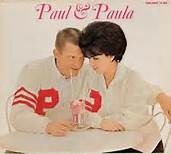
“Hey, Paula” was recorded by the singing duo Paul and Paula (not their real names, by the way) and soared to number one on the charts in February of 1963.  Ray Hildebrand (Paul) took his inspiration for this tune from Annette Funicello’s hit “Tall Paul”.  He and Jill Jackson (Paula) performed it on a local Texas radio station and were soon persuaded to record the song at a nearby Fort Worth studio.  Back then, a simple arrangement and innocent lyrics could get you a number one hit.  Today…. not so much.

This one is ideally suited for a male/female duo (obviously) and would add a great deal of “sweetness” into any set.  You can download the midi or MP3 tracks from the Pop/Rock list.  If some in your audience don’t like it or make fun, instruct them to move to Canada – it’s cold enough up there to match their hearts.


Bennie and the Jets

thJVSJ83J4    Sometimes, Elton John didn’t like his own songs.  He couldn’t even get the name spelled right on this one.  The track is spelled Benny on the sleeve of the single and in the track listing of the album, but Bennie on the album vinyl disc label.  Makes no difference, I guess, but I prefer Bennie – just seems right.  Besides, it’s such a fun song to perform, who cares how it’s spelled?  Well, I kinda do…. but I’m way too anal.

Unlike most of Elton’s arrangements, this one is remarkable in its simplicity.  We have piano, bass, one rhythm guitar, drums, and a sprinkling of organ at the very end.  Those powerful G major piano chords at the beginning are just begging for more and seem lonely.  In fact, after recording it, the band sat back in the studio and said “That’s really very odd”.  Elton thought it was too empty and definitely didn’t want it released as a single.  But, of course it was, and became one of his most popular hits.

Today, in concert, it’s like he doesn’t quite know what to do with the song.  He might play it true to the original, simple and uncluttered.  Or, if he’s feeling frisky, he’ll go on for 20 minutes improvising between two chords – GM7 and FM7.  If you plan on performing it straight and true, my arrangement here will suit you just fine.  However, if you’d like to jazz it up a bit, there’s LOTS of room for your keyboard acrobatics.  But you’ll have to learn the song… imagine that.

Here’s Elton and his acrobatic piano:

http://www.vevo.com/watch/elton-john/bennie-and-the-jets-(red-piano-show-live-in-las-vegas)/GBUV70700130