Back to the 60’s … again.

38391755    Don’t Let the Sun Catch You Crying was a huge hit for “Gerry and the Pacemakers” in 1964.  The band wrote the song, but it was first recorded by Louise Cordet, a British singer who toured with Gerry Marsden and the boys…. and performed with The Beatles as well.  Her version pretty much sucked, so the band recorded it themselves – which was a very good idea.  It was their biggest hit by far.

I had almost forgotten about this song until a friend of mine, Summer Purvis, reminded me it was one of the best songs from the early 60’s.  She has it on her iPod and that’s good enough for me.  Thanks, Summer, for helping me add another great song to my list.  This arrangement may not be exactly like the original, but I think I’m close.  Hopefully, there’s a singer out there (preferably with an British accent) who’ll take this back-up track and introduce the 60’s to a whole new generation.

Did you know the original name of the group was “Gerry Marsden and the Mars Bars”?  Glad they changed it…
A More Innocent Time

il_570xN_271941005    The early sixties were glorious times.  There were sock hops, Elvis, cherry cokes, Fizzies, bike-riding without spandex or a stupid helmet, American Peoples encyclopedias, root beer floats, candy cigarettes, Herman’s Hermits,  Ed Sullivan, American Bandstand,  Drive-ins,  Wolfman Jack,  and Chef Boyardee pizzas (awful).  What I wouldn’t give for our society to go back to those innocent days.

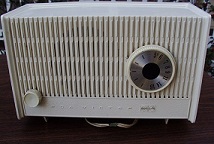
At a very early age, I was introduced to pop music through my little white AM radio beside my bed.  I listened to disc jocky Art Roberts every night on WLS  radio out of Chicago.  I would keep it very low (so my parents couldn’t hear) and listen to Art’s “top three songs” every night at 9 o’clock (I was supposed to be asleep).  Seems like two out of the three were always Beatle songs, but in ’63 and ’64  a British group called The Dave Clark Five were giving the “fab four” a run for their money.  The song I am featuring here is a warm ballad entitled “Because”.  This was a far cry from the raucous hits Dave Clark and the boys had put out before – e.g. Glad All Over and Bits and Pieces.  This was a whole new dimension for this band – melodic with great vocal harmonies and superb chord changes.  “Because” quickly climbed to #3 on the U.S. charts and many thought they would surpass The Beatles in popularity.  Not even close.  Dave Clark was a good-looking chap (for a drummer) but Paul McCartney had cornered the market on “cuteness”.  And, after 1964, Lennon and McCartney took song-writing to whole new heights.

So, if you’re doing a “sixties set”, this song should be included.  It’ll bring back alot of memories to a whole lot of people.  I can still hear it coming out of my cheap little radio and thinking it sounded just wonderful!

Really, Al?

morning-coffee    Al Jarreau is a terrible lyricist – just awful.  That trait is painfully obvious in the song “Mornin”.  I mean, really – “Good Mornin’ Mister Radio, mornin’ little Cheerios, mornin’ sister Oriole” – (sigh) typical Al Jarreau… and very lame.

Nevertheless (now there’s a good song), if I’m vacationing in Gulf Shores and I’m standing on my balcony with a cup of coffee early in the morning and gazing out at the Gulf, Al Jarreau singing this song in the background would be quite fine.  And it is also quite fine as a great dance tune in the middle of your second set.  Never mind the words, it’s the beat that counts on this one.  And if you can whistle, just take out track 7 and do it yourself.  Track 4 is the lead, so obviously that has to go.  Pick it up off the Pop/Rock list and have some fun with it onstage.  By all means, write your own lyrics if you want.  Al won’t care…

Here he is in his insane video with this crazy song – click the link below.  I really do like it…. for some reason.

http://www.bing.com/videos/search?q=mornin+al+jarreau+video&FORM=VIRE1#view=detail&mid=4678260FE22F28D5338C4678260FE22F28D5338C

Boogie Oogie What??

Disco-Club-Dancing    If you’re unlucky enough to have booked a wedding (worst gig ever but the money’s good), sometime during the course of the evening a cry of “DISCO” will rise up when it’s least expected. Disco music is just boring for musicians. It’s the same beat and chord progression – over and over again. But people still love disco and it does lend an air of excitement if not overdone – six disco songs in a row will totally wear out your drummer.
But if you’re using my sequences, you don’t have to worry about a drummer dropping over from exhaustion.  As long as your voice is up to it, you can boogie all night long.  Which brings me to the song “Boogie Oogie Oogie” by “A Taste of Honey”.  This arrangement has a long intro (32 bars) which will give everybody a chance to get on the floor before you sing the first line “If you’re thinkin’ you’re too cool to boogie”.  And the first line of the chorus “so get on up, on the floor” is a blatant invitation for disco mayhem.  You’re gonna have to follow this one up with “I Love the Nightlife”, but no more than two in a row – that’s the rule.

(download the midi from the pop/rock list – lead synth is on track 9)

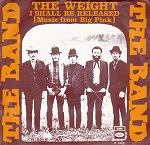
The Weight

thNB1ITYD8    In 1965, Bob Dylan hired a group of musicians for his U.S. Tour and then the 1966 World Tour.  This same group had backed up various frontmen and were just simply “the band”.  In ’68, they moved with Dylan to New York and recorded the infamous Basement Tapes,  which launched their own debut album the following year – Music from Big Pink.  They thought a great name was “The Band” for obvious reasons.  Ten successful albums later, they are now rock icons.

The Weight was never a significant hit but it is definitely their best-known song.  I remember sitting around a college dorm playing it over and over again trying to figure if they were singing “Take a load off, Annie” or was it “Granny”?  I think we even played it backwards.  Anyway, just for fun, put this one in your song list.  Everybody knows it (even the Millennials) and will sing along.  The words are basically nonsensical and have a vaguely religious context, but it doesn’t belong in church – it’s certainly nightclub material.

There are three lead tracks – harmonica, flute, and fiddle – because of that wonderful end phrase “you put the load right on me”.  You and your backups will have to work a little to get that right – worth the effort.

Only in America

thX0RSFFY5   This is not the “Brooks and Dunn” song – this is “Jay and the Americans” back in 1963 – when America was uncomplicated and just plain sweet.  What have we done?

Anyway, this is a good one for your Fourth of July gig.  Mute track 6 and sing it yourself (download midi from Pop/Rock list).  Ignore the Millennials who’ll cry out, “What is THAT?”  They’d never understand.

Body and Soul

microphone-stage    This is late night stuff here.  It’s 1 AM and you’re coming back off break for the last set.  You only bring three members of the band with you for the first song – keyboardist, drummer, and the upright bass player.  You’re going to record this one for your upcoming live album, so your sound man has set up that vintage Shure mic you so dearly love.  It sits there now at the front of the stage – all alone.

Your album is a collection of jazz standards and “Body and Soul” is the most recorded ever.  You watched the video of Amy Winehouse performing it with some guy named Tony Bennett and knew this was a song for you.  It was Amy’s last recording before she died in 2011.  And now you’ll step up to that mic and make it as sultry and sexy as she did.

If you don’t have that great trio behind you, use this sequence to get the same effect (it’s on the jazz list).  Well, not quite the same, but close.  And you don’t have to pay high-priced musicians to make you sound good.  Take the sax lead out and let your vocals take over…. your mic is waiting.

Breakfast in America

ArticleSharedImage-21281  If you’re younger than 40, you may never have heard of Supertramp.  They’re an English band from the 1970’s whose music was considered “progressive rock” or “art rock” with heavy emphasis on electric piano and saxophone.  They’re one of the top ten rock bands ever – in my more than humble opinion.

Through most of the ’70’s, Supertramp was what we used to call an “underground” band – hidden from the mainstream with a fan base that was small but fanatic.  However, when they released the album “Breakfast in America” in 1979,  they achieved the commercial success they so well deserved.  Some critics claimed that many of the songs were “anti-American”, but the band claimed they were just having some satirical fun with some of the aspects of our culture.  I, personally, don’t believe there was any malice intended.  We all just need to lighten up.

Obviously, this is the title track  from that album.  Have some fun with it – even satirical fun would be just fine.  Caution:  this is a “guy” song.  The lyrics “Not much of a girlfriend, I never seem to get a lot”  just don’t translate well for a female singer.  Sorry, ladies, but you’ll just have to let us have this one.

Find it on the Pop/Rock list with a banjo taking the lead vocals (yes, a banjo).

For Once in My Life

51KPWFCufVL  For Once in My Life was NOT written by Stevie Wonder. There, I said it! Contrary to popular belief, Wonder had nothing to do with the composition of this song, other than turning it into an upbeat pop version that was supposed to be swing style.  It was written for a female vocalist named Barbara McNair, but it somehow morphed into a Motown hit for Wonder.  I’ve never liked it… until now.

I’m giving you the song as it was meant to be performed – big band style.  I put in a clarinet to do the lead, just to give you the flavor that you need to perform it correctly.  I wish Stevie would have let this one go.  Give my way a shot…

It’s not on the Pop/Rock list – it’s on Jazz/Swing – as it should be.

Don’t Know Why

Norah-Jones-norah-jones-65642_1024_768   The first time I heard this song on the radio back in 2003, I couldn’t wait to get the CD. Every song on the album was a gem and Norah Jones became one of my favorite vocalists.  This song was actually written by one Jesse Harris, who collaborated with Norah on her debut album Come Away With Me and won a Grammy for his efforts.

Norah Jones’ real name is Geetali Shankar.  Her father was Ravi Shankar, the virtuoso sitar player from India.  So glad she didn’t take up the sitar – such an irritating instrument.  We’re all quite happy with her jazz-piano style, thank you.

Open your second set with this and you’ll get everybody’s attention.  The midi sequence is on the Pop/Rock and Jazz/Swing lists.