Download Instrumental A classic, this one. It was originally titled “Merry Christmas to You”, which would have worked too. You could take almost any line out of this beautiful piece and use it as the title. It was written in 1945 by Mel Torme and Bob Wells – then recorded in ’46 by the Nat King Cole trio (and several more times until Cole got it right in 1961 – full orchestra). It is the most performed Christmas song of all time – and for good reason. It’s simply a masterpiece – both musically and lyrically.
I do hope everybody has those “chestnuts roasting on an open fire” tonight. Merry Christmas to all!
Download Several weeks ago, I was commissioned to do the opening backup music for a high school Christmas production (actually an arrangement I did years ago and now is all over the web). They wanted to begin their program with “Winter Wonderland”. Here’s how I saw it: a dark stage (maybe one blue spot) and an audience full of anxious parents. Then, out of nowhere, bells chime, and the music flows through the auditorium. The students quietly move onto the stage (undercover of the blue spot) and begin singing at precisely the right time (they have rehearsed, after all). The lights come up… and the parents relax and enjoy.
A chap named Richard Smith penned the words to “Winter Wonderland” after watching the snow fall in a city park in Honesdale, Pennsylvania. There is no mention of the Christmas holiday in the lyrics, so how it became a Christmas favorite is a bit puzzling. I guess the “Sleigh bells ring” part makes it so. The Guy Lombardo orchestra had a top-ten hit with this tune in 1936, as did Johnny Mercer and Perry Como in later years. Johnny Mathis recorded it in 1958 (unfortunately), but screwed around with the arrangement so much as to make it unappetizing.
In the first bridge section, the snowman’s name was “Parson Brown”. However, in the second bridge, the snowman was referred to as a “circus clown”. Odd, don’t you think? Oh, well… it was never supposed to be a Christmas song anyway.
Download Okay, back to the basics and simple arrangements. This Christmas classic was written in 1951 by Meredith Willson, best known for writing the book, music and lyrics to the Broadway musical “The Music Man”. The original title was “It’s Beginning to Look Like Christmas” – one of those “the lyrics don’t fit the melody” kind of things.
Anyway, Willson wrote the song while staying at a Grand Hotel in Nova Scotia. The lyrics make reference to a “tree in the Grand Hotel/one in the park as well”. The park was “Frost Park”, located directly across from that same hotel operating in a newer building to this day.
“Alvin and the Chipmunks” covered the song in 1961 and again in 1981 – and it was a big hit in both years. Hey… if Alvin covers a tune, it must be good. Never underestimate a chipmunk.
Additional note: I detest playing Broadway-style arrangements – but sometimes ya gotta suck it up for the sake of the music. ‘Tis the season, after all.
Download “Mary’s Boy Child” probably isn’t instantly recognizable to you as a holiday tune. But it’s the story of the birth of Jesus Christ in Bethlehem and certainly should be in your Christmas repertoire.
This was a HUGE song for Harry Belafonte in 1957 and was the first ever to sell a million copies in the United Kingdom. It was originally a West Indian piece written by songwriter Jester Hairston, who later popularized the spiritual “Amen” during the civil rights movement in the United States. Belafonte’s version was very slow and just a bit maudlin. It was the first record to play over 4 minutes and still be a hit, as the attention span of most listeners is absurdly short. A Caribbean vocal group named “Boney M.” did a cover of “Mary’s Boy Child” in 1978 – much faster with an appealing reggae beat that gave them a #1 hit they sorely needed at the time. That’s the arrangement I liked and flagrantly tried to duplicate here – because I have no shame.
If you’re going to perform this during your Christmas show, you’ll have to mute tracks 4 and 5, as I needed two tracks to recreate the 4-part harmony. My favorite lyric line is in the chorus: “And man will live forevermore/because of Christmas Day”. Think of that, people! We can live forever! But only if we acknowledge that night in Bethlehem for the miracle it was. Certainly a time for rejoicing.
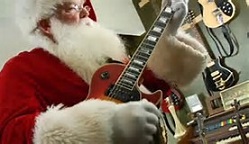
Download Instrumental We’re goin’ country here, folks. You walk into your local country bistro on a cold December night, and there onstage is a really, really, REALLY good lead guitar player…. in a Santa suit! It’s Christmas, after all.
“Jingle Bells” was originally titled “One Horse Open Sleigh” and written by one James Lord Pierpont (now there’s a privileged name if I ever heard one) in the mid 1800’s. According to thefactsite.com, this tune was the very first song broadcast from outer space. Who knew? It was the 16th of December, 1965, when two astronauts (Tom Stafford and Wally Schirra) from the Gemini 6 space program, sent the following message to mission control: “We have an object, looks like a satellite, going from north to south…I see a command module and eight smaller modules in front. The pilot of the command module is wearing a red suit.” It was then they broke into “Jingle Bells” with a harmonica and sleigh bells they had smuggled on board. The 16th? Seems Santa had an early start that year.
I don’t know a guitarist who can play quite this well (it’s much easier on a keyboard with guitar voicing), but I’m sure there’s one out there somewhere.
Download Instrumental This is a simple, straightforward arrangement of the number one best-selling Christmas song of all time. You don’t need anything fancy behind you with a piece of work like this. Your vocals will sell the song – the music just carries you along.
Bing Crosby recorded “White Christmas” in 1942, just a few months before the movie (Holiday Inn) was released. It was a huge hit, soaring to number one on the Billboard charts and staying there for 11 weeks. This classic even won an Academy Award for best song in ’42. Every year after that, just before Christmas, it was released again and climbed to the top of the charts each time. Crosby finally had to re-record it as the master copy wore out from all the pressings. His second recording is the one most heard today.
Why Crosby chose to whistle during the second chorus is truly beyond me. Insane! But, as a nod to that insanity, I used a whistle for the solo in this arrangement. Ol’ Bing might appreciate that, even if I don’t. But, really… what do I know?
My friends and family are enjoying quite the “White Christmas” right now up north. How I miss the snow and cold weather. Wait! No, I don’t. I’ll take 65 degrees on the beach over snow and ice any time. Sorry, folks.
Download Yep, it’s that red-nosed critter again. This tune never goes away and has been done a thousand different ways… maybe more.
Rudolph came into being in a story written for a promotional coloring book for Montgomery Wards stores in 1939. The writer, Robert May, based it on his own childhood difficulties of being the smallest kid in his class. He was picked on and taunted and labeled a misfit. Aren’t children wonderful? Today we call it “bullying”, but that’s a whole other issue. It’s ironic that this poor kid grew up to write a tale that delights other children to this day. You’d have thought that Rudolph would have been some bad hombre who kicked over Christmas trees and terrorized chipmunks.
May’s brother-in-law, songwriter Johnny Marks, turned the story into a song and presented it to Gene Autry to record. The “Singing Cowboy” didn’t want anything to do with it, but his wife convinced him otherwise. Sometimes it’s a good idea to listen to your wife, guys… actually, most times. Okay, all the time. “Rudolph, the Red-Nosed Reindeer” went on to become the second biggest-selling Christmas song of all time. Can you guess the first? That one will be the subject of our next blog.
Download Instrumental I just realized I have 3 different versions of “Have Yourself a Merry Little Christmas” on the Christmas list – must be my favorite holiday song. I was going for “moody” on this version and I let Boots Randolph and Al Hirt carry the lead. ‘Course, you’ll be singing the lead line, so Al and Boots can go away. And if you don’t know who those two musicians are, you’re too young to be reading this article. Google them.
In the long ago film MeetMe in St. Louis, Judy Garland first introduced this wonderful piece to the world. She thought it was way too melancholy for the scene, so she set about rewriting some of the lyrics to make it more “uplifting”. Even though the minor changes she made helped a bit, the song was still really too sad for the season. Later on, Frank Sinatra came to the rescue. He changed the line “until then we’ll have to muddle through somehow” (not a whole lot of holiday cheer there) to “hang a shining star upon the highest bough” (much better). Thanks, Frank.
The song was written by Hugh Martin and Ralph Blane – I never heard of them either. They wrote the melody first and then tried to put lyrics to it. Musically, it didn’t work. The first line was supposed to be “Have Yourself a Merry Christmas”, but there were those pesky two extra syllables in the melody they’d written that didn’t quite fit. So they added “little” to the title and everything was right with the world again.
As I mentioned, you have a choice of arrangements on the Christmas list, depending on where you’ll be performing the tune or what your mood is. Don’t know why I keep arranging it differently. It’s such a good piece of music you just naturally improvise, I guess. There’s the big band style (#1), the smooth jazz (#2) and now this one (#3). Just took me awhile to get it right.
Download This is the “Ronettes” version of this Christmas tune. Who are The Ronettes, you might ask. Well, that’s them up there in the picture. Personally, I would have named them “The Beehives”. How do women do that to their hair. Amazing. Better question is, why do they do that. Oh, well… it was the sixties, after all.
I didn’t care for their music, even though they had big hits with songs like “Be My Baby” and “Walking in the Rain”. The music completely overwhelmed the singers with WAY too much instrumentation. Then I found out what the problem was…. their producer was Phil Spector – a true idiot when it came to music production. He invented what he called the “Wall of Sound”, which only means load up the music with as many instruments as possible and throw in the vocals as an afterthought – I called it the “Wall of Noise”. The guy is now doing time for second degree murder and won’t be eligible for parole until he’s 88. “Wall of Sound” indeed.
The Ronettes did a nice job on “Sleigh Ride” – in spite of Spector. This arrangement is ideally suited for an opening number in your Christmas set. There’s plenty of room between verses to introduce yourself to the crowd and include a bit of clever banter. It sets your audience up for the holiday music to come. The backup vocals were especially fun to recreate on track one – “ring-a-ling-a-ling-a-ding-dong-ding”. I always thought that bit of nonsense behind the lead singer made the song. Bet that wasn’t Spector’s idea…
If you listen closely at the beginning, you can hear horses galloping in the background. The original version had a horse’s neigh, but I didn’t have that on the Yamaha. Hence, the galloping. I know… really stupid.
Download Instrumental Not long ago, on a chilly December evening, I walked into a honky-tonk bar (my favorite kind of bar – all the real people dwell there) and heard the band do this “Christmas” song. I had never heard it before (been under a rock for the last 40 years), but I liked it. It’s a “cry in your beer” kind of tune, but there’s certainly a holiday theme there so we’ll include the backup music on our Christmas List.
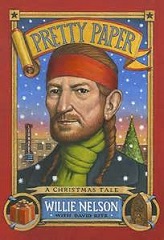
“Pretty Paper” was written by Willie Nelson back in 1963 when he was a successful song writer but relatively unknown. He turned the song over to Roy Orbison, who had a semi-hit with it, but I have to say his delivery was dreadful. In 1979, Nelson re-recorded it himself for his Christmas album of the same name. The song is about someone who encounters a homeless person on the street during the holidays, but decides he’s much too busy to give the poor chap even a second glance (nice).
Okay, it’s not the happiest of holiday music, but I guarantee your honky-tonk crowd will love it. And, it’s another opportunity to play piano like Floyd Cramer – never pass that up.

 Download Instrumental A classic, this one. It was originally titled “Merry Christmas to You”, which would have worked too. You could take almost any line out of this beautiful piece and use it as the title. It was written in 1945 by Mel Torme and Bob Wells – then recorded in ’46 by the Nat King Cole trio (and several more times until Cole got it right in 1961 – full orchestra). It is the most performed Christmas song of all time – and for good reason. It’s simply a masterpiece – both musically and lyrically.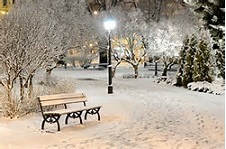






 Stageworthy Backing Tracks by Dave Zobrist