Slow Boat to China

thhhr00kmg  Download    “I’d like to get you on a slow boat to China” was a well-known phrase among poker players, referring to a person who has lost steadily and mightily.  But Frank Loesser, the composer of this wonderful piece, turned that phrase into a romantic song, placing the title in the mainstream of catch-phrases in 1947.

It’s been recorded every way imaginable by almost everybody:  Rosemary Clooney and Bing Crosby did it way too fast – Liza Minnelli thought it should be so slow the orchestra went to sleep – Bette Midler’s version?  Too bouncy and cute – Renee Olstead had a nice jazzy arrangement but please leave out the obnoxious backup vocals, Renee –  Jimmy Buffett gave it a shot and it was just right…. but then I’m a little prejudiced.

Imagine you’re at the helm of your 40-foot Hatteras and heading out of New Orleans for a leisurely coastline cruise (imagination is a wonderful thing, isn’t it?).  You’re humming a parody under your breath: “I’d like to get you – on a slow boat to Destin”.  This arrangement is how I would feel the song as I slip by Biloxi –   happy, carefree and unfettered by those pesky backup singers.  Life is good.

[Jazz/Swing List]

Blueberry Hill

thocqd91cu  Download    This is a simple, basic arrangement of a simple, basic song – but, oh, what a hit it was for Fats Domino.

The Glenn Miller Orchestra had a #1 hit with it in 1940.  Louis Armstrong went to #29 on the charts with “Blueberry” in 1949.  But in ’56, Fats made it an international favorite and the tune became a rock n’roll standard.  It’s ranked #82 on Rolling Stone magazine’s 500 Greatest  Songs of All Time. “Blueberry Hill” may be simple and only have three chords but, as Trump would say… it’s HUGE!

One of the funniest references I’ve seen to the song was on the The Far Side, a comic written by the great Gary Larson:  A man is talking in a phone booth on top of a hill called “Blueberry Hill”.  There’s a hand tool lying in the grass.  He says into the phone, “Norm?  This is Mitch… You were right — I found my drill.”  Well… thought it was hilarious!

Anyway, work this one into your act.  Everybody knows and loves it.  The backup tracks of the Fats Domino version are on the Pop-Rock List.  You can listen to Glenn Miller do it below:


Nobody Knows You

thpcj1u5qg  Download Instrumental    Everybody loves you when things are going swimmingly. You’ve got plenty of money that you don’t mind throwing around for the benefit of your “friends”. But let any of that change for the worse and those friends abandon you like rats on a sinking ship.  That’s the message behind the song “Nobody Knows You When You’re Down and Out”.  It’s a tune about having the world at your feet one day, and the next day being “down and out”.

It was written in 1923 by Jimmy Cox at the height of the so-called “roaring twenties” – a time of prosperity and devil-may-care attitudes.  Oddly enough, the song wasn’t recorded and released until October of 1929 by Bessie Smith – just days before the stock market crash that caused ‘The Great Depression”.  How apropos is that?

I call this one a “smile production” number because if you perform this song, you’re going to make a production out of it and it’s gonna make people smile and nod their heads approvingly.  You may have lulled your crowd into knowing what song you’re going to do next during the first two sets – a definite faux pas.  Two fast ones then a slow one, then two fast ones.  It’s a trap we all fall into.  But start your third set with this baby and make it a production – Bette Midler style – and you’ll have your audience wondering what in the world you’re going to do next.  Now you can go back to one slow, two fast, etc.

Here’s the arrangement:  you’ll sing the first two verses (piano part), let the clarinet take a solo, then come back in for the finale (when in this instrumental the trumpet takes over).  Make it fun and unexpected.  Keep your crowd in suspense.  Then come back in your 4th set and do a polka (just kidding).

[Jazz/Swing List]


Does Anybody Have the Time?

thap5jcc9c  Download    Combine big band with rock’n’roll and what do you get? Chicago!  No, not the city.  Not even the Cubs.  Chicago is just probably the best rock band ever!  And this was their best song… in my most humble opinion.

“Does Anybody Really Know What Time It Is” (might be the longest song title ever too), was recorded by The Chicago Transit Authority (later shortened to just Chicago) in 1969.  It was the band’s third top ten single – behind “Make Me Smile” and “25 or 6 to 4”.  I’ve heard that the original version had a “free form” piano solo as an introduction before the horns come in, but I’ve never heard it.  I’ll bet it’s tasty.

The band formed in 1967 in Chicago, Illinois and were originally called “The Big Thing”.  They worked primarily as a cover band for a year or so before moving into original material.  They were politically charged and sometimes experimental and formed a huge following in the “Windy City”.  But they weren’t making any money.  They softened their message, composed more moderate songs and the rest is history. And over a hundred million records sold makes for quite a history.  I arranged this back-up sequence years ago and it’s served us well.  Give it a try.  Take note of my “fake” backup vocals.  Love this keyboard!!!

[midi is on the Pop/Rock List]

Me and Bobby McGee

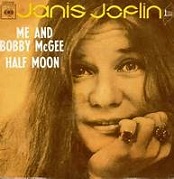
thsibpy232  Download    Ah, Janis Joplin. Such a sweet innocent voice amidst all the turmoil of the late sixties. NOT!  The girl was loud and raucous and had a voice that was somehow raw and sexy at the same time.  She was a force to be reckoned with and if you didn’t like… well, that was just too bad.

Janis recorded “Bobby McGee” for her Pearl album just a few days before her death in October of 1970.  It was written by Kris Kristofferson and first recorded by Roger Miller, who had a semi-hit with it.  Kristofferson recorded it himself, of course, but it’s the Joplin version that people most remember.  He didn’t even hear her recording of his song until the day after she died.  The song went to number one on the Singles Chart, making it the second ever number one hit released posthumously – the first being “(Sittin’ On) The Dock of the Bay” by Otis Redding.

I was never wild about this tune.  I mean, I liked it okay,  but just the idea of Janis recording it so close to her death is intriguing.  What I discovered while working up this arrangement is that her back-up band kicked butt!  Especially the keyboards – who knew?  She broke away from the band “Big Brother and the Holding Company” and formed her own band called “The Kozmic Blues Band”, taking “Big Brother’s” keyboard player, Steve Ryder, with her – excellent idea.  After dissecting the song and trying to mimic Ryder’s piano genius, I have a new appreciation for this composition.  And the bass player wasn’t any slouch either.

I hate the sudden ending, but in the interest of being as true to the original as possible – there it is.  If you perform this song and you have dancers, you’ll have to warn them:  “The song ends in 4 beats so be ready, people.  All right… STOP!”


Who’s Cheatin’ Who?

thunpurwn9  Download    For years we played a small beach club called “The Happy Hooker” and one of the most popular songs we did was “Who’s Cheatin’ Who”  – there just might be a correlation there somewhere.  Draw your own conclusions.

This tune was first recorded by Charly McClain, a female country performer who had a string of hits in the 80’s.  Her very first single to hit the charts was “Lay Down” and one of her very last was “Don’t Touch Me There”, with “Who’s Cheatin’ Who” somewhere in the middle.  Hmmmm… do we see a pattern here?  Not really… I’m sure she’s a very nice girl.

Seventeen years went by before the song was recorded again – this time by Alan Jackson in 1997.  What I like about Jackson is it’s not all about him – he gives his band plenty of room to shine.  His version is full of guitar, fiddle, and piano solos – which is ideal for keeping your crowd on the dance floor.   At midnight, in a beach bar, they’re not listening to the lyrics, trust me.  It’s all about the beat and “where’s the waitress?”

[Country List]

Mack the Knife

thXKFY8T1D  Download    Until about a week ago, I had no idea Frank Sinatra and Jimmy Buffett recorded this classic jazz piece together.  We used a couple of different arrangements of “Mack the Knife” depending on where we played, but when I heard this one I just had to give it a try.  I used a guitar for Sinatra’s part and a clarinet for Jimmy’s – must be some symmetry there somewhere.

A music drama called Die Dreigroschenoper (known in English as The Threepenny Opera) premiered in Berlin in 1928.  It was a tale of a deadly but dashing chap named Mackie Messer (Mack the Knife).  This song opens the play, comparing our hero to a shark and then telling sinister tales of his murders, rapes, and robberies.  Nice fellow, this Macheath.

“Mack” was first introduced to the U.S. by Louis Armstrong in 1956, but it’s the 1958 Bobby Darin version that is most noted today.  Ella Fitzgerald in a live performance forgot the words (there’s a lot of them) and made up her own as she went.  That recording earned her a Grammy Award.  Of course, Sinatra recorded it on his own  but always insisted that Darin’s record was the “definitive” version. Tony Bennett gave it a shot, as did Kevin Spacey, Marianne Faithfull, and Michael Buble.  Even the restaurant chain McDonalds introduced a character in the mid-eighties called “Mac Tonight”, whose signature song was a parody of “Mack the Knife”.  And now we can throw Jimmy Buffett into the mix.  The circle is now complete.

Listen to Sinatra and Buffett:

http://en.musicplayon.com/Frank-Sinatra-Mack-The-Knife-feat-Jimmy-Buffett-Music-Video-175324.html


You Can Call Me Mr. Blue

thFE1H5QP2  Download Instrumental    The original version of this song was pretty sappy, I’ll admit.  And the introduction was waaaaaay too long.  And the music itself was simplistic and rather boring.  So why did this tune stick in all our heads?  Can’t tell ya… but it might have something to do with really great lyrics and coming out at a much more innocent time.  And almost anyone can sing it… that helps.

“Mr. Blue” was recorded by “The Fleetwoods” in 1959 and was their second chart-topping hit of that year (the first was “Come Softly To Me”).  Pat Boone had a semi-hit with it later but he brought out those insane backup vocals even more.  “Wah-oo-wah-ooo”?  Please stop!  Bob Dylan even recorded it – didn’t even bother to listen to that one – I can imagine.  Frankie Avalon did it – ‘course, he covered everything.  Then Garth Brooks saved the day in 1990 on his album No Fences.  He kicked up the tempo a bit which made it way more interesting.  AND (drum roll, please) there are no backup vocals!!!

I kept the intro in but made it much shorter.  You don’t want your audience nodding off before you get into the meat of the song.  Give this one a try – it’s on the Pop/Rock List.  Oh.. and the Country List – sorry, Garth.

Almost Like Being in Love

thVG5JG7OL  Download Big Band    Ya gotta love technology!  These days, a simple Yamaha keyboard can crank out all the subtleties of a big band arrangement.  It takes awhile, but the results are amazing and well worth the trouble.  If you like big band, that is.

“Almost Like Being in Love” is a song from the Lerner and Lowe musical Brigadoon.  I personally detest Broadway music, but many tunes have been taken out of a musical and turned into something palatable.  Sinatra did just that with this little gem.  Nat King Cole cranked out a pretty nifty arrangement too.  Brigadoon (the musical -ugh) premiered on Groundhog Day in 1947.  Coincidentally, the movie Groundhog Day (starring Bill Murray in 1993) featured Cole’s version.  If you remember, Murray’s character relives the same day over and over again in the film.  Finally, he wakes up to a new day and is mighty happy the fiasco is over.  It’s then that the soundtrack brings in a smooth Nat King Cole singing the first line “What a day this has been…” –  very cool.  Oh, and don’t look up the musical – it’s just plain silly.

The big band arrangement works well in South Florida Golf Country clubs, as they like everything big and brassy down there.  We like the way Cole did it and it works just fine for smaller venues and older crowds.  Your choice.  You can download the smoother Cole arrangement off the Jazz/Swing list – it’s version 2.


On the Road Again

thMKDCDET2  Download    Willie Nelson is not only a famous country singer and consummate “outlaw bad boy”, he is quite the actor as well.  In 1980, he played a country singer struggling to find national fame in the film Honeysuckle Rose.  Willie did a really decent job playing his character, Buck Bonham, which shocked the heck out of me.  I just recently saw the film and was pleasantly surprised at Willie’s expertise, even though the story line was so predictable I could have written it myself.  Very entertaining… check it out if you haven’t seen it.

The executive producer approached Nelson on a flight to Hollywood and asked him to write a theme song for the movie.  Well, no grass grows under Willie’s feet – he immediately jotted down the lyrics to “On the Road Again” on a barf bag.  That’s a rather inauspicious beginning to one of Willie’s best songs, but it is what it is.

Willie wanted a “train beat” to be the driving force behind the song and his drummer complied with rapid 16th notes on the high hat.  I guess that sorta mimics the sound of a train on the tracks, but I used a muted guitar to get the same effect.  Besides, why a train?  They’re “on the road again”.  Don’t understand Willie’s reasoning on that one – but when’s the last time I won a Grammy?  Uh… never.

[On the Country List]