Rudolph

thzbmf5wfy  Download   Yep, it’s that red-nosed critter again. This tune never goes away and has been done a thousand different ways… maybe more.

Rudolph came into being in a story written for a promotional coloring book for Montgomery Wards stores in 1939.  The writer, Robert May, based it on his own childhood difficulties of being the smallest kid in his class.  He was picked on and taunted and labeled a misfit.  Aren’t children wonderful?  Today we call it “bullying”, but that’s a whole other issue.  It’s ironic that this poor kid grew up to write a tale that delights other children to this day.  You’d have thought that Rudolph would have been some bad hombre who kicked over Christmas trees and terrorized chipmunks.

May’s brother-in-law, songwriter Johnny Marks, turned the story into a song and presented it to Gene Autry to record.  The “Singing Cowboy” didn’t want anything to do with it, but his wife convinced him otherwise.  Sometimes it’s a good idea to listen to your wife, guys… actually, most times.  Okay, all the time.  “Rudolph, the Red-Nosed Reindeer” went on to become the second biggest-selling Christmas song of all time.  Can you guess the first?  That one will be the subject of our next blog.

Have Yourself a Merry Christmas

thpobhg7kl  Download Instrumental   I just realized I have 3 different versions of “Have Yourself a Merry Little Christmas” on the Christmas list – must be my favorite holiday song.  I was going for “moody” on this version and I let Boots Randolph and Al Hirt carry the lead.  ‘Course, you’ll be singing the lead line, so Al and Boots can go away.  And if you don’t know who those two musicians are, you’re too young to be reading this article.  Google them.

In the long ago film Meet Me in St. Louis, Judy Garland first introduced this wonderful piece to the world.  She thought it was way too melancholy for the scene, so she set about rewriting some of the lyrics to make it more “uplifting”.  Even though the minor changes she made helped a bit, the song was still really too sad for the season.  Later on, Frank Sinatra came to the rescue.  He changed the line “until then we’ll have to muddle through somehow” (not a whole lot of holiday cheer there) to “hang a shining star upon the highest bough” (much better).  Thanks, Frank.

The song was written by Hugh Martin and Ralph Blane – I never heard of them either.  They wrote the melody first and then tried to put lyrics to it.  Musically, it didn’t work.  The first line was supposed to be “Have Yourself a Merry Christmas”, but there were those pesky two extra syllables in the melody they’d written that didn’t quite fit.  So they added “little” to the title and everything was right with the world again.

As I mentioned, you have a choice of arrangements on the Christmas list, depending on where you’ll be performing the tune or what your mood is.  Don’t know why I keep arranging it differently.  It’s such a good piece of music you just naturally improvise, I guess.  There’s the big band style (#1), the smooth jazz (#2) and now this one (#3).  Just took me awhile to get it right.

Sleigh Ride

th17711dr2  Download   This is the “Ronettes” version of this Christmas tune.  Who are The Ronettes, you might ask.  Well, that’s them up there in the picture.  Personally, I would have named them “The Beehives”.  How do women do that to their hair.  Amazing.  Better question is, why do they do that.  Oh, well… it was the sixties, after all.

I didn’t care for their music, even though they had big hits with songs like “Be My Baby” and “Walking in the Rain”.  The music completely overwhelmed the singers with WAY too much instrumentation.  Then I found out what the problem was…. their producer was Phil Spector – a true idiot when it came to music production.  He invented what he called the “Wall of Sound”, which only means load up the music with as many instruments as possible and throw in the vocals as an afterthought  – I called it the “Wall of Noise”.  The guy is now doing time for second degree murder and won’t be eligible for parole until he’s 88.  “Wall of Sound” indeed.

The Ronettes did a nice job on “Sleigh Ride” – in spite of Spector.  This arrangement is ideally suited for an opening number in your Christmas set.  There’s plenty of room between verses to introduce yourself to the crowd and include a bit of clever banter.  It sets your audience up for the holiday music to come.  The backup vocals were especially fun to recreate on track one – “ring-a-ling-a-ling-a-ding-dong-ding”.  I always thought that bit of nonsense behind the lead singer made the song.  Bet that wasn’t Spector’s idea…

If you listen closely at the beginning, you can hear horses galloping in the background.  The original version had a horse’s neigh, but I didn’t have that on the Yamaha.  Hence, the galloping.  I know… really stupid.

[Christmas List]

Pretty Paper

thksh3bdh2  Download Instrumental   Not long ago, on a chilly December evening, I walked into a honky-tonk bar (my favorite kind of bar – all the real people dwell there) and heard the band do this “Christmas” song.  I had never heard it before (been under a rock for the last 40 years), but I liked it.  It’s a “cry in your beer” kind of tune, but there’s certainly a holiday theme there so we’ll include the backup music on our Christmas List.

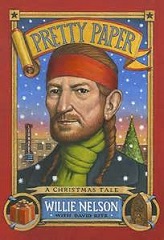
“Pretty Paper” was written by Willie Nelson back in 1963 when he was a successful song writer but relatively unknown.  He turned the song over to Roy Orbison, who had a semi-hit with it, but I have to say his delivery was dreadful.  In 1979, Nelson re-recorded it himself for his Christmas album of the same name.  The song is about someone who encounters a homeless person on the street during the holidays, but decides he’s much too busy to give the poor chap even a second glance (nice).

Okay, it’s not the happiest of holiday music, but I guarantee your honky-tonk crowd will love it.  And, it’s another opportunity to play piano like Floyd Cramer – never pass that up.

Holly, Jolly Christmas

white-christmas-kiss  Download Instrumental   I just get a kick out of saying holly and jolly in the same sentence.  If you play a job anywhere during the month of December, you simply have to include a Christmas song or two (it’s the law).  And if you choose to sing this particular piece, you’ll suddenly find that you have an Irish accent.  Trust me, you can’t help yourself.

“Have a Holly, Jolly Christmas” was written by Johnny Marks and most famously recorded by Burl Ives.  Contrary to popular belief, Ives was not born in Ireland.  He came into this world in a little town in Illinois called Hunt City.  He learned Irish and Scottish ballads from his grandmother, hence the slight Irish brogue in his voice.   But our Mr. Ives was an all-American folk singer and actor of stage, screen, radio and television.  This tune was one of his holiday hits from the animated film Rudolph, the Red-Nosed Reindeer.

I do have one problem with the lyrics, however.  There’s a line that says, “Somebody waits for you – kiss her once for me”.  Really?  Now we have a victim.  Some unsuspecting soul is going to get an unexpected, unwarranted, and probably unwanted kiss on behalf of a perfect stranger.  What’s up with that!

[Backup tracks on the Christmas List]

Here Comes Santa Claus

thhg8f0kxo  Download   Well, folks… we’re on our way to Christmas once again.  From now until the big day, I’ll be featuring backups for fun holiday music on each post of this blog.  As an added bonus, you can download the MP3 file from here to your computer – then you can burn them to a CD and have a decent instrumental Christmas album courtesy of yours truly.  Hopefully, we’ll have something that’s worth a listen.  But don’t hold your breath.

This Christmas favorite was written and first recorded by Gene Autry.  In 1946, he was riding his horse “Champion” in the Hollywood Boulevard Christmas Parade when he got the inspiration for “Here Comes Santa Claus”.  Autry was positioned just two spots ahead of Santa Claus in the procession – so all the kids were completely ignoring him and screaming “Here comes Santa Claus”.  Makes sense that the youngsters were more interested in Santa, but Autry wasn’t impressed.  He did get a hit song out of it though.

Everybody on the planet has recorded this one, but I loosely used the Elvis arrangement as my own inspiration.   I love the vocal backups on the keyboard and use them perhaps too much.  Can’t help myself…

New York, New York

thy68eohkk  Download Instrumental   This song is the epitome of big band – been working on it for two weeks. You can’t perform this just anywhere. If you’re a single performer, it’ll look too much like karaoke and cheapen your presentation. You have to use this as a big production number in an actual show to be effective. Nevertheless (another good song), it should be on your menu to trot out when needed.

Tony Bennett aligned himself with the city of San Francisco (he left his heart there, you know).  And when you think of Frank Sinatra (which I seldom do, but it happens), New York City immediately comes to mind.  In truth, Liza Minnelli was the first to sing “New York, New York” in a musical of the same name in 1977.  It was actually pretty awful… Liza’s typical quivery-voiced, Broadway-esque bilge.  The following year, Sinatra started performing it in his Radio City Music Hall concerts and it soon became his signature tune.

The song is best understood from the perspective of an entertainer who leaves a small town in hopes of making it in the big city.  Instead of worrying and fretting about the difficulties he will face, our boy (or girl) embraces the challenge, knowing full well that “If I can make it there, I’ll make it anywhere”.  It’s a song of inspiration and all about beating the odds.  Must be the reason it’s played every year before the horses run at the Belmont Stakes.  And why it’s played at the end of a winning game at Yankee Stadium – they play Liza’s version when they lose.  Most appropriate…

[Backup Tracks on the Jazz/Swing List]

Gone Fishin’

th0vtgbhin  Click to Play  Sometimes,  you just have to pick up a fishing pole and find a nice secluded place to drop your line in the water.  And, sometimes, you just feel like singin’ a song about it.  “Gone Fishin” is a “la-la” tune – makes you want to bob your head from side to side and sway your body just a little.  It’s just for fun and not for all venues.  I mean, you’re not going to follow “Sweet Home Alabama” with this little piece in a nightclub somewhere unless you’re feeling especially brave.  But there are times when you just want to make people smile…

I recorded this a couple years ago while searching for a song that didn’t offend anybody (that’s getting harder and harder these days).  You can click on the link to the right of the above picture to hear it.  If you listen carefully, you can hear Karen’s sweet backup vocals helping me stay on key.  Originally recorded by Arthur Godfrey in 1950, it didn’t become a semi-hit until the following year.  Bing Crosby and Louis Armstrong sang it as a duet on Crosby’s radio show and it became mildly popular.  I’d like to be the one to bring it back, but times are different.

So if you’re feeling frustrated or cantankerous or just plain rude – grab a fishing pole, head for the nearest lake or stream, and hum this little tune.  You’ll feel better for it, I promise.

But you have to bob your head… just a little.

[Gone Fishing backups on the Pop/Rock List]

But It’s All Right

th7cuvv009  Download Instrumental    File this one under OFM (Old Fart Music).  But if you want to draw your people out on the dance floor (and who doesn’t?), the drum, bass and guitar intro will do the job for you.  The “hook” is those three instantly recognizable guitar chords that play throughout the song (A, C#mi and Bmi). But, it’s really all about the beat, folks… you can dance to it – and they will.

“But It’s All Right” was released by J.J. Jackson in 1966 and peaked at #4 on the R&B Charts.  He recorded the song in the United Kingdom and the studio musicians featured some of Britain’s best jazz players – they would later make up his backup band on the road for a few years.  This one is listed as one of the top ten dance tunes of the ages.  It really should be in your repertoire.

This is dedicated to all the “snowflakes” on our college campuses right now who think their world has come to an end:  “But it’s all right”, boys and girls – get over it!

Shout!

thpffu339t  Download   For some reason,  I have this sudden urge to play and sing this song called “SHOUT”.  I must be very happy about something but I’m not quite sure what it is.  Hmmmm… wait!  Now I know.   We could change this one-word title to “TRUMP” and I’d be just as happy.  Never express political opinions, Dave, but I can’t help myself…. it just makes me want to SHOUT!!!

“Shout” was originally recorded by the Isley Brothers and released in 1959.  Since then, it’s been covered by just about everybody – even The Beatles recorded a live version of it – not to mention Bon Jovi and Alvin and the Chipmunks.  It’s a happy, energetic tune that works great about halfway through the third set if you have a wild crowd that’s paying attention.  They’ll join in and hands will fly in the air every time the word “shout” comes around in the lyrics.  Magical.

We use a pretty straightforward version – slowing it down for 32 bars – then jumping back in and ending it fairly quickly.  A live band can perform this one forever – bringing the volume down to a whisper then slowly bringing it up again – very effective.  But if you’re working alone, you don’t have the luxury of screwing around with it for 15 minutes.  This sequence will work well for you solo performers and duos.  I used my “growly sax” for the lead just because it’s fun and has the intensity your vocals should have.

If you’re performing anywhere in California, I’d stick with the title “Shout”.  Screaming “Trump” at the top of your lungs might get you in trouble.  Just sayin’…