How Can You Mend a Broken Heart?

   A singer named Randy had a bit of an odd request for a song. He’s in Monticello, Indiana, working the lobby of a place called The Brandywine Inn.  Apparently, he sits in a corner with a microphone and nothing else.  Well, I’m guessing he’s dressed, but one never knows.  Anyway,  he wants this Bee Gees classic without any violins, trumpets, or harps.  What?  You’re killing me here, Randy.  Just piano, bass, guitar, and drums?  That’s it?  It’s the Bee Gees, man!  But all is not lost.  He needs a backup vocal track.  At least that gives me a little bit of fun.   But you know best, Randy.  It’s your gig, after all, not mine.  There might be other people who need it this way, so I’m putting this arrangement on the Pop/Rock list.  But couldn’t we throw in just one violin?  Guess not.

Barry and Robin Gibb wrote “How Can You Mend a Broken Heart” in 1970 in an hour and a half.  They composed it in the style of Andy Williams (who never sang anything without a violin, by the way… Randy).  They offered it to Williams, but he turned it down.  So The Bee Gees recorded it themselves and it became their first No. 1 hit in the United States.  Before that they had minor hits with terrible songs like “I Started a Joke”, but this tune was a turning point for them.  Then along came Disco and the rest is history.

If you ever stop in at the “Brandywine”, you might casually walk up to Randy and say, “Ya know, that song would really sound good with strings.”  Just for fun…
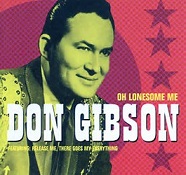
Oh, Lonesome Me

  Download Instrumental   Don Gibson wrote “Sweet Dreams” for Patsy Cline, “I Can’t Stop Loving You” for Ray Charles, and this one for himself.  He recorded “Oh, Lonesome Me” in 1957 and since then every country artist on the planet has redone it in their own peculiar way.  Some of their renditions are good, but others just suck.  I’ve always really liked the tune, but never once performed it.  Must be a reason for that.  Yeah… it’s just a hair too country.

I heard a version of this by Ray Price the other day and liked it because he threw in some violins and brass.  But it was still definitely “country”.  I sat down to do his arrangement, but halfway through my work I realized the lead instrument didn’t have to be a steel guitar.  I kept hearing a clarinet playing around underneath the melody instead of the guitar.  So I thought, “Why not Dixieland?”  Yes, Dixieland.  I live a hop, skip, and a jump from New Orleans – so sue me.  Can’t help it – my keyboard has a great clarinet voice.

So if you want to perform this classic country tune like your audience has never heard it before, give these backups a shot on your next gig.  Pete Fountain, eat your heart out.  My apologies to Mr. Gibson.

Rikki, Don’t Lose That Number

  Download Instrumental    It’s a sad time in the music world.  Walter Becker passed away last week from an undisclosed illness.   He was only 67.  Rarely does a death in the music industry affect me so greatly.  It happened with John Lennon, then Harry Chapin, and now Walter Becker.  But, at some point in time, we all must carry on without our heroes.  I don’t have any left.  Sad.

Becker and Donald Fagen were the core members of Steely Dan, a hugely successful band of the 70’s – my favorite group from that decade.  The music was a cerebral combination of rock and jazz, with a little R&B mixed in for good measure.  Sophisticated rock, I would call it.  The music was complicated and, I thought, difficult to play.  The lyrics were cryptic and quite sarcastic at times – but oh, so interesting.  Becker played bass and lead guitar while Fagen handled the keyboards and lead vocals.  And that was pretty much the whole band.  They used studio musicians for any other instrumentation and none of those guys were ever considered to be a part of Steely Dan – that’s just how cerebral they were.  Kinda snobby, really,  but who cared?   The music was outrageously good!

“Rikki, Don’t Lose That Number” was released in 1974 and was their most successful single.  Donald Fagen met a New York artist at a college party named Rikki Ducornet.  Even though she was married and pregnant at the time, Fagen wrote down his phone number and gave it to her before he left the party.  She was tempted to call him but, alas, never did.  Hence, the song.  Rumor has it that Becker was interested in her too, so the idea of them collaborating on this song is intriguing.  Ah, musicians…. they’re a sordid lot.

And speaking of “sordid”, I won’t tell you how Steely Dan came up with their name.  You can google that one yourself.

December, 1963

  Download Instrumental   Where were you in December, 1963? Not alive yet? Too bad, cause you missed the best era of music ever.  This song came out right smack dab in the middle of the “disco craze”, but was never actually considered a disco tune.  But I remember being in plenty of discos in the 70’s and dancing to this one nearly every night.  And, over the years, I’ve played this song a million times.  It always gets the crowd out on the dance floor.  So, if you’re having trouble getting your audience to pay attention, trot this baby out there.  Guaranteed to get ’em dancing.  That’s your job, after all.

The Four Seasons recorded this in 1975 and it was their last number one hit.  The official title is “December, 1963”, but everyone knows it as “Oh, What a Night”.  Kinda silly, really.  The first line is “Oh, what a night – late December back in ’63” – and that’s the only time December is mentioned.  But “Oh, what a night” is repeated over and over and over again.  Go figure.  Artists, right?

What’s worse – Frankie Valli didn’t sing the lead.  I mean, you hear “Four Seasons” and you think Frankie Valli – who else?  But, oh no.  For some reason, they let the drummer, Gerry Polci, do the honors and reduced Frankie to backup vocals.  How dare they take my favorite Italian out of the spotlight (his real name is Francesco Stephen Castelluccio – kinda rolls nicely off the tongue, doesn’t it?).   I think Frankie could have done it even better, but that’s just me.

Makes no difference, I guess, who sang it.  Now it’s your turn.  Take these backup tracks and have some fun with it …


The Way We Were

  Download Instrumental   I can’t stand Barbra Streisand.  It’s not just her politics.  There’s something about her whole persona that makes me go “Ewww”.  Now, before I start getting hate mail from all you “Babs” fans out there, let me say that I know she’s a fantastic vocalist and actress and she’s won Oscars and Grammys and is an icon and I’m not.  I know all that.  She’s just not my cup of tea.  But this tune belongs to her.

That being said, “The Way We Were” was a perfect fit for Streisand.  However, the arrangement was soooo sweet and sappy, much like most of her other recordings.  I can understand the movie soundtrack having to be melodramatic (saddest movie ever!), but she recorded it again a year or two later and it was just as maudlin… only in a different way.  I guess that’s why I lean toward the Gladys Knight version for my arrangement here.  If you plan on using my backups of this song, be sure to give Gladys a nod when you perform it.  Don’t mention me, unless you want to confuse the crowd – “Who’s that?”  “Wha’d she say?’  “Who?”  “Never heard of him”.

Marvin Hamlisch wrote the music for “The Way We Were” in 1973.  Sadly, he died in 2012 at the tender age of 68.  Streisand sang this song as a tribute to Hamlisch at the 2013 Oscars ceremony.  She stepped out onstage when his picture was displayed, humming the lyrics and seeming to float across the stage (she floats everywhere).  Then she said a few words about her friend Marvin, ending with, “Marvin left us way too soon, but I’ll always have those wonderful…” (then she deftly moves into singing the famous first line of the song)  “memories, like the corners of my mind”.  It was pretty cool and well performed – much as it pains me to say it.

See her Oscar performance on the link below:

https://www.bing.com/videos/search?q=streisand+at+2013+oscars&view=detail&mid=F237176E655C74F71098F237176E655C74F71098&FORM=VIRE

At the Hop

  Download Instrumental   Let’s go back to 1958, shall we?  Rock’nRoll was really coming into its own that year, and “At the Hop” was at the top of the charts.   Always liked this one, mostly because it featured a boogie-woogie piano (not a guitar in sight). Those repetitive eighth notes are a bit tiresome to play live, but it can be done –  it’s all in the wrist.

Danny and the Juniors were four guys who met in high school in the mid-fifties.  They were all fascinated with “doo-wop”, a music genre that usually consisted of 4 or 5 people who sang but couldn’t play an instrument.  There would be one lead singer and 3 or 4 other singers gyrating behind him –  inserting harmony in all the right places.  The bands behind the doo-wop artists never got any recognition… ever.  Don’t get me wrong – I like doo-wop.  But a little of it goes a long way.  Kinda like bluegrass music.

The original title of this tune was “Do the Bop”, but a certain DJ at the time convinced them to change the name.  That DJ was Dick Clark.  In fact, “At the Hop” didn’t really get popular until Clark invited them to perform on American Bandstand in January of “58.  They soon recorded “Rock and Roll is Here to Stay” and “Dottie” – both of which did moderately well on the charts.  Dick Clark signed them to Swan Records in 1960, where they recorded their final hit “Twistin’ USA”.  After that, they just sorta disappeared…. much like doo-wop.

Click on the link below to see the boys sing this one on American Bandstand:

https://www.bing.com/videos/search?q=danny+and+the+juniors+at+the+hop&qpvt=danny+and+the+juniors+at+the+hop&view=detail&mid=CA99A0A801C2263AFA59CA99A0A801C2263AFA59&FORM=VRDGAR

When Sunny Gets Blue

    This is one of my all-time favorites.  It’s sad, sultry and romantic – everything a great jazz song should be.  I’m the first to admit I’m not a good vocalist (I’m a player, NOT a singer), but I just had to try this piece.  If you’re a for-real singer, take my arrangement and blow your audience away with something they may not have heard before.

“When Sunny Gets Blue” was written by Marvin Fisher and Jack Segal – originally recorded by none other than Johnny Mathis.  But it took Nat King Cole to really put this one over the top and make it the jazz standard it is today.  This tune is perfect in every way, but an idiot DJ named Rick Dees almost derailed its popularity by doing a stupid parody that somehow caught on with the masses.  The first line is “When Sunny gets blue, her eyes get grey and cloudy”.  But this creature Dees recorded it as “When Sunny sniffs glue, her eyes get red and bulgy”.  That was 50 years ago, but I’d still like to wring his scrawny little neck.

My Yamaha has great saxophone sounds, and they really shine in this arrangement.  Everybody loves a sax solo.  Trot this one out in the middle of your last set.  Hit the blue spots, wait for the crowd to quiet down a bit, then take them back to when music was really music.  It would be a nice effect if you could squeeze out a tear or two, or at least let your voice crack a little.  Just sayin’….

Rocky Top

  Download Instrumental    “Trapped like a duck in a pen”.  That piece of lyric in the last verse pretty much sums up the premise of this song – country boy stuck in the city and hating it.  Been there – done that.   All the noise – the traffic – the crush of people – rush hour….. thanks but no thanks.  Although I’m by no means a country boy, I despised city life.  It’s been “Green Acres” for me for a very long time now.  Still looking for that mountaintop in Tennessee though.  Guess I’ll have to settle for a sand dune on the beach… and a Margarita.

This piece was written in a Gatlinburg hotel room by Boudleaux and Felice Bryant – the husband and wife song-writing team largely responsible for the success of The Everly Brothers.  They were working on a few slow tunes for the TV series Hee Haw and decided to take a break and work on something a little more up-tempo.   They wrote “Rocky Top” in ten minutes.  Guests at the Gatlinburg Inn can now stay in “The Rocky Top Suite” for the bargain price of $600 a night.  Think I’d rather go with the “Duck Pen Special” for 75.

This is a great semi-bluegrass tune you can suddenly spring on your audience in the middle of the third set.  It will surprise and delight, believe it.  A word to the wise, however.  We discovered that you don’t want to play this one if you have a room full of Alabama football fans.  Trust me…. the “Roll Tides” will overpower the music and you may not make it out of the club in one piece.

Stoned Soul Picnic

    Being “stoned ” doesn’t necessarily have anything to do with marijuana.  In this song, what’s getting us stoned is moonshine mixed with honey and sassafras – sounds like a good combination to me.  That’s the same concoction Granny mixed up as “rheumatiz medicine” on The Beverly Hillbillies.  She joked that it might not cure your aches and pains but “it sure made you happy you got it”.  Those were different times, folks.

The 5th Dimension released this one in 1968.  They loved the song and couldn’t believe it was written by a white girl from the Bronx.  I guess the attitude then was white people can’t write soulful songs.  The writer’s name escapes me now…no, wait… Laura Nyro, that’s it.  After this tune became a huge hit, they recorded several more Laura Nyro masterpieces, like “Sweet Blindness” and “Save the Country”.  But none of these measured up to “Stoned Soul Picnic”.

Now I’m going to clear up one of the great musical mysteries of all time.  What does “surry” mean? The very first line is “Can you surry, can you picnic” – then the chorus is “Surry down to a stoned soul picnic”.  I always envisioned people traveling to this great picnic in a horse and carriage (a surrey) – women in big hats carrying parasols and men with ascots around their neck.  But you’ll notice that the “surry” in the song drops the “e” – so it’s not a horse and carriage thing.  When asked what the word “surry” means, Nyro said, “Oh, it’s just a nice word”.  Turns out, it’s actually a slurred play on the phrase “Let’s hurry”.  Surry.   Say it and think “Let’s hurry”.  Works, doesn’t it?  Now the song makes sense.  You were a sly one, Laura.

Build Me Up, Buttercup

  Download MP3    Over dinner the other night at Ruby Tuesday, my wife/mistress/best friend/chick singer suddenly asked. “Why didn’t we ever do the song Build me up, Buttercup?”  Now, where did that come from?  Did I miss something between the Shrimp Fondue and the Cajun Rib Eye?  “Uh, I don’t know,” I said. “Maybe because you never asked.”  She looked at me kinda funny and said, “Do you think I should have?”  Okay… this could be a trick question.  Did she ask me to work it up in 1997 and I forgot?  Entirely possible.  I scanned the menu for buttermilk biscuits which could have, you know, reminded her.  Nothing.  Best to admit I was wrong.  About what, I don’t know, but it doesn’t matter.  I was just wrong not to have ever performed that song…. period.

“Build Me Up, Buttercup” is one of those tunes that you hear and think it’s pretty good, but then promptly forget you ever heard it.  Then, two years later, you’re wandering through the produce department at Winn-Dixie and there it is again – happily streaming through the ceiling speakers.  You leave the store and it’s out of your head again for another two years.  The song is just…well…forgettable.

“The Foundations” recorded this one in 1968 – bet you don’t remember them either.  They were the first multi-racial group to ever have a hit.  Interesting.  It really is a good piece of music and could work in a small dance venue.  I won’t ever do it – can’t remember the lyrics – but you might want to give it a try.  The original had lots of backup vocals but I’m using horns instead since I arranged it with “solo performer” in mind.  It’s on the Pop/Rock list.

Quick!  Download the backing tracks…. before you forget!  D’oh!