Boogie On, Reggae Woman

  Download Instrumental    This is a terrific dance number and this arrangement is perfect for a break song.  The last 16 bars  have no vocals and it’s the perfect opportunity to talk over the music and let them know you’re going on a break.  You know the spiel:  “Ladies and Gentlemen, we’ll be back in 15 for more killer music – don’t go away”!  What you really mean is “I have to pee” or “I need a drink”, but they don’t need to know that.

“Boogie On, Reggae Woman” is neither boogie music nor Reggae, but who’s gonna question Stevie Wonder?   Actually, I suppose the guitar track is a little bit Reggae, but that’s a stretch.  Doesn’t matter.  Stevie did what he always does – establishes a “groove” that he likes, then writes lyrics all around that groove.  That’s why his lyrics don’t always make a lot of sense, but who cares?  Like I always say, it’s all about the music, man.

Mr. Wonder plays all the instruments on this song.  That would include lead vocals, acoustic piano, Fender Rhodes piano, guitar, bass, harmonica and drums.  It’s easy for me to duplicate all those tracks myself – I just change the keyboard to sound like a guitar (or whatever) and play that track.  Then I move on to another instrument voice and track – then put it all together.  But Stevie (the man’s a genius) actually can play all those instruments and does so with aplomb.  I think that’s amazing…. and quite humbling.

So there you have it boys and girls – a new break song with plenty of room at the end to explain away your frantic scramble off the stage and to the bathroom.

Ooh, Baby Baby

  Download Instrumental    It’s 1966, and you’re sitting in the back seat of your brand new Ford Falcon with your best girl. You’re trying hard to get to first base (wherever that is), but the Stones “I Can’t Get No Satisfaction” is playing on the radio and it’s not helping…. at all!  But then, the silky smooth vocals of Smokey Robinson come across the AM dial and everything changes.  She snuggles closer and lets you put your arm around her.   Thanks, Smokey!

“Ooh, Baby, Baby” was written by Robinson in 1965 for his group, The Miracles.  The song went to number 16 on the Billboard Hot 100 chart, but had its greatest commercial success 13 years later when Linda Ronstadt took it to number 7.  It’s a mournful tune, as Smokey laments cheating on his girl and won’t she please take him back.  He swears it’s not autobiographical but, really, haven’t we all been there and done that?  The tight backup vocals and strings (I love arranging the strings track on any song) make this one a classic and it should definitely be in your set list.

We used this piece a lot as the final song of the night.  You want your crowd to be all cuddly and sweet as they go out the door.  And, just think…. you helped a few of them get to that mysterious first base (actually, I think I do know where that is).

[Scroll down for another song written by Smokey… then scroll some more]


A Whiter Shade of Pale

  Download    I never really liked playing an organ. It seems like if you hold a chord for just a hair too long the sound becomes dissonant and downright unpleasant. I never got the hang of it.  Besides, they’re too heavy to haul around.  But I do like songs that feature the instrument, and this is one of the best.

“A Whiter Shade of Pale” was recorded by the British group “Procol Harum” (yes, that’s how it’s spelled) in 1967.  It’s considered one of the best rock ballads ever put to vinyl and has sold over 10 million copies.  A chap named Keith Reid wrote the lyrics and claims he overheard the phrase “whiter shade of pale” at a party.  He thought it had potential to be a song, but ol’ Keith thought almost everything could be a song.  He was strictly a lyricist – couldn’t play an instrument or sing – so he scrambled around and put together a band to record the many compositions he had written.  Even though he was not a musician per se, he was considered an official member of “Procol Harum” – as well he should have been.  He was the brains behind the whole operation.

The words are a little convoluted and many insane interpretations of their meaning have been offered up over the years.  But, trust me, they don’t refer to drug use or UFO’s or even the Holocaust – they’re about getting drunk and trying to score.  It’s just that simple.  Besides, it’s not the lyrics that are the beauty of this masterpiece – it’s the music itself and how it flows.  Our Mr. Reid listened primarily to classical and jazz music, and this one has definite Bach overtones.  In fact, if you listen closely, you can pick out a few bars of Johann Sebastian Bach’s Air on the G String composition.  And, if memory serves, I believe Bach played the organ every now and then.  Pretty sure of it.

Some people can play an organ like nobody’s business – the intro to “Light My Fire” by The Doors comes to mind.  Then there’s Booker T and the MG’s with “Green Onions”.  I don’t play the organ very well, but maybe you do.  Put  “Whiter Shade of Pale” in your repertoire, if it’s not already there.  The lyrics are not relevant or even particularly poetic.  It’s the music, man… it’s almost always about the music.

Check out this YouTube video.  It’s the band playing live in Denmark in 2006 with a full orchestra.  Freakin’ beautiful!

Hello, Mary Lou

  Download Instrumental    Ricky Nelson never sounded better.  However, some of you out there may not have a clue who Ricky Nelson is.  You’ll have to go back to the late 1950’s and early 60’s (best time ever for music) and get acquainted with a TV program called The Adventures of Ozzie and Harriet.  Go ahead – google it.  I’ll wait…

The program ran for 14 straight seasons with 30 episodes per season – all written by the dad, Ozzie Nelson.  It has the distinction of being the longest-running live American sitcom and served as the springboard for the youngest son’s music career – that would be Ricky.  Ozzie knew his boy had talent, so he began writing situations into the show that highlighted Ricky’s singing.  He first performed on an episode in 1957 – covering Fats Domino’s hit, “I’m Walkin”.  That’s all it took to make him a bona fide teen idol…. much like me.  Yeah… right.

“Hello, Mary Lou” was written by Gene Pitney (of “Town Without Pity” fame) and first recorded in 1960 by Johnny Duncan (don’t know who he is).  Our boy Ricky recorded it the following year and had a pretty decent hit with it.  In the United States, this song was on the B-side of the record with a little tune called “Travellin’ Man” as the main feature.  However, in the United Kingdom, “Mary Lou” was released on the A-side, with “Travellin’ Man” taking a back seat.  I always knew the Brits were smarter than us, except for the way they spell “traveling”.  You’ll notice my arrangement is a bit on the “country” side, but it still works, I think.

My only problem with Ricky Nelson is I always thought he was gonna nod off at any minute.  Oh, I know… that “sleepy-eyed” look is supposed to be really sexy, but a little energy couldn’t hurt.  Wake up, Rick!  And say hello to Mary Lou…

I think he’s shaking his right leg on the link below to stay awake:

https://www.bing.com/videos/search?q=hello+mary+lou+video&qpvt=hello+mary+lou+video&view=detail&mid=15185D8C057EC4C23E9415185D8C057EC4C23E94&FORM=VRDGAR


Whatever Will Be, Will Be

  Download Instrumental    I walked into a convenience store the other day and there was a young lady behind the counter with a tatoo around her neck. Upon closer investigation (I had to lean in), I realized it read “Que Sera Sera”.  That made me remember a song I hadn’t heard in years and I told her so.  Her reply was, “It’s a song?”  After assuring her that, indeed, it was a very nice song, she told me she also had a tatoo on her back and did I want to see it?  “Uh…. no, thank you – I’ll take your word for it.”  Sheesh!

Anyway, “Que Sera Sera” IS a song and quite a good one at that.  Some may consider it a bit “hokey” (me included), but it has a nice set of lyrics that tell a little story.  The entire life of the narrator is portrayed in just three verses – no, it’s not you’re born, you live, you die (well, maybe).  First there’s childhood – “When I was just a little girl, I asked my mother, what will I be?”  Then there’s the young adulthood stage –  “When I was young I fell in love, I asked my sweetheart, what lies ahead?”  Finally, parenthood – “Now I have children of my own, they ask their mother, what will I be?”  Of course the answer to all three questions is  – “whatever”.  That’s my convenience store clerk’s interpretation.  Rather blunt, I think.

The translation is actually a much sweeter “whatever will be, will be” and is of French origin, or Italian, depending on how it’s spelled.  Doris Day introduced the song in the film The Man Who Knew Too Much in 1956, and also used it as the theme song for her TV series.  It’s a wholesome tune – innocent and not of this time, but sometimes a little nostalgia does us all some good.  Try it onstage, but choose your audience carefully – not everyone will like this one. I used an Italian accordion for the lead because I thought it fit the style of the song and I happen to like everything Italian.  You, of course, will sing it – beautifully, I hope.  Arriverderci…

To Love Somebody

  Download Instrumental    You remember the Bee Gees, right?  And who can forget the movie Saturday Night Fever?  Well, you might not have been born yet, but surely you youngsters have seen it.  In that iconic motion picture,  the brothers Gibb introduced us to the driving bass and drum arrangements that came to be known as “disco”.   We all had big fun with the disco craze, back in the day.  I still have a big disco ball buried deep in my closet.

But, believe it or not, there was life before disco for the Bee Gees.  There was a time in the late 60’s when they were writing and recording actual love ballads – “To Love Somebody” was one of the best.  But I’m about to upset all you females out there who swooned over Barry Gibb.  Handsome lad, that one.  It seems their manager, Robert Stigwood, was an integral part of the gay show business crowd in London (you can see where this is going, can’t you?).  He asked Barry Gibb to write a song just for him.  Gibb said in an interview much later, “Personally, the song was for Robert.  I don’t think it was a homosexual thing”.  Well, take from that what you will, it’s still a great love song.  Sorry ladies… this Bud’s not for you.

As is the case with so many tunes, the Bee Gees let this one fade out at the end.  I hate that!  And it certainly doesn’t work on stage.  The ending on this arrangement is a bit unorthodox, but I think it works.  Might make you smile… wait for it.

Cracklin’ Rosie

    Download Instrumental    This was Neil Diamond’s first American # 1 hit – recorded in 1970.  It’s a dynamic and memorable melody coupled with terrific instrumental backing by L.A studio musicians called The Wrecking Crew  (I’ve written about them before).  The lyrics to “Cracklin’ Rosie” suggest his devotion to a certain “woman of the night”.  Or does it?

Diamond swears it’s not about a woman at all.  “Cracklin’ Rose” was a  wine favored by lumber jacks in the Northwest.  It seems many a lonely night was spent “lumber-jacking” without a woman in sight.  So they turned to their favorite beverage to help ease their..uh… tension.  Now the lyrics take on a whole new meaning.  “Cracklin’ Rose, you’re a store bought woman”  (I’m thinking local liquor store).  “You make me sing like a guitar humming”  (ever sing at the top of your lungs when you’ve had a few drinks?)

Then there’s “Cracklin’ Rose make me smile” (ever had a stupid grin on your face after 3 scotches?).  “If it lasts for an hour, that’s all right – we got all night”  (now I’m thinking we need TWO bottles).  It’s about a bottle of wine, folks!  Disappointed?  Me, too… kinda.  Still a good song with a great beat for your dancing crowd.

You know, it strikes me that this could also be about one of those sexy blow-up dolls.  Just sayin’…

She Believes in Me

  Download Instrumental    I don’t very often say a song is “sweet”, but there’s no other word to describe this one.  Makes me feel all cuddly inside and all my “macho” instincts go right out the window.  “She Believes in Me” was recorded in 1979 by Kenny Rogers and was a huge crossover hit from country to pop.  I never paid too much attention to it, but I should have.  It’s a tune I can definitely relate to, but I missed it completely.

It’s not easy being married to a musician – just ask Karen.  There’s the borderline obsession for music  that sometimes seems to crowd out all other things in life.  A woman can get tired of that rather quickly.  Then there’s the long, late nights when she stays home, fighting sleep, because she wants to be awake when you get home.  Then there’s the fact that a huge success in the music business belongs only to a few.  Usually, the most you can hope for is a bit of local celebrity – it rarely goes any further than that.  I’ve had plenty of that kind of notoriety, but it never made me rich…. even though I promised that it would.

The lyrics to this great song say it all (they usually do, don’t they?).  The very first line:  “While she lays sleeping, I stay out late at night and play my songs”.  Then, “Quietly she says how was your night?/and I come to her and say it was all right”.  Ah…  been there, done that.  But the chorus sums it all up: “And she believes in me/I’ll never know just what she sees in me/I told her someday if she was my girl, I could change the world/with my little songs… I was wrong”.  (sigh)  Doesn’t that make you feel “cuddly”, guys?  Well, it does me.

So, all you male singers out there with a woman at home while you’re out working the clubs, this song would be a terrific gift to her – just to show you care,  even through the hard times.  I solved many of these issues by marrying a musician (French Horn in her college symphony band), so she understood – most of it.  After a few years,  I managed to change her from being a church singer to working with me as a pop vocalist – she’s never forgiven me.  After that, those long musical nights were spent together – misery loves company, you know.

Green Door

  Download Instrumental    In 1956, this song soared to number one on the charts.  A honky-tonk piano player named Bob Davie wrote the tune and recruited a local disc jocky (Jim Lowe) to sing it.  It was recorded in Lowe’s Greenwich Village apartment with The High Fives doing backup vocals.  Actually, the original sounded like it was recorded in someone’s apartment, but that didn’t stop it from becoming a huge hit.

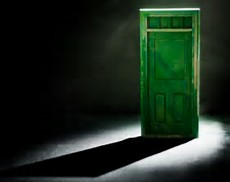
The inspiration for “Green Door” came from a popular club in Dallas, Texas.  There was something mysterious about this bar and its bright yellow door (Davie used “green” because it fit better in the lyrics).  Not just anyone could get in.  If you didn’t know the password, the door was promptly slammed in your face.  How rude!

Our singer tells us that he can’t sleep at night because he’s obsessed with what’s behind the green door of that enigmatic honky-tonk.  He hears partying and loud music and raucous laughter and rollicking piano-playing behind that door (sounds a lot like our house) and he just has to get in to join the fun.  He even tries a fake password – “Joe sent me”- not very original and the door remains closed.  “Green door, what’s that secret you’re keeping” has us all wondering what nefarious things are going on behind that green portal.  Doncha’ just love a good mystery?

I gave our arrangement a more “boogie-woogie” feel than the original.  A guy named Shakin’ Stevens recorded this one in the 80’s and I really liked his rowdy version – so I’m imitating that style – I’ve never had an original thought in my life.  And, just so you know, our front door isn’t green and you don’t need a password to get in… 5 bucks will do just fine.


I’m Walkin’

  Download Instrumental   I love the sound of a clarinet, so I’ll throw a clarinet solo into a song every chance I get.  Granted, it has no business in a Fats Domino tune, but do we care?  I know, I know… the solo is supposed to be a saxophone, but I decided to make the lead vocal track a sax.  Any singer who uses these backups will mute the sax track anyway.  And… they’ll have a clarinet solo.  Cool!  Everybody confused now?  Good.

Fats Domino was stranded on a lonely country road in 1957.  As he walked away from his old car, a fan drove by and shouted out, “Hey! That’s Fats Domino – and he’s walking!”  “Yeah”, Fats muttered to himself, “I’m walking”.  He wrote this song in his head as he walked toward town.  Personally, I don’t believe this tale, but it has followed this song around for years.  In the first place, Fats Domino was famous in ’57 and wouldn’t have been driving an old car.  And, what self-respecting “fan” would leave him stranded?  I mean, if I saw Lady Gaga walking away from a broken-down vehicle, I would pick her up even though I’m hardly a fan.  Wouldn’t you?  Well, maybe not.

The title “I’m Walking” has nothing to do with the rest of the lyrics.  But all Mr. Domino (is that his real name?) was concerned about was cranking out a rollicking two minute tune that everyone would remember.  He certainly achieved that lofty goal with this one.  Stick this one in your repertoire and you’ll make your crowd happy – that’s what it’s all about.

Domino is his real name – Antoine “Fats” Domino Jr. to be precise.  He was born in New Orleans to a French Creole family and never lived anywhere else.  Even in the heyday of his fame he insisted on sleeping outside in a hammock every night.  What a guy!  Ya know, living in “The Big Easy” all his life, you’d have thought he’d have put a clarinet solo in there somewhere.  Just sayin’…