It’s Not Unusual

  Download Instrumental    It is the year 1965. An up-and-coming singer, who calls himself Tom Jones, sits in a studio ready to record “It’s Not Unusual” for the second time. The tune was written for Sandie Shaw, one of the most successful British singers of the 60’s.  As was the custom in those days, an unknown artist would record a song with a full arrangement so that the intended “star” could listen and decide if they wanted to record it themselves.  In this case, Tom Jones was the unknown singer on the demo.  Shaw listened, then declared that the person to record it should be “whoever that is on the demo”.  So our Mr. Jones got the nod and scored his first ever hit.   Say “thank you”, Tom.

But in the studio that day in ’65, there was a problem.  The keyboard player in his band couldn’t show up for the session.  The piano part was not a major part of the tune – it was mostly brass – but there would still be subtle holes in the arrangement without piano.  The drummer had an idea (drummers always do).  He knew of a piano player working a coffee house just across the street who might be able to fill in.  Tom said, “Go get him – we’re paying by the hour here”.  When Reginald Dwight entered the studio to save the day, Jones thought “Odd-looking chap, but he can play well enough”.  Reginald eventually adopted the stage name… wait for it… Elton John.

Oh… and the guitar player on the set that day?  None other than Jimmy Page from Led Zeppelin.  It’s a small world after all, folks… at least in the music biz.

This one inspired something called the Carlton Dance.  One of the characters on “Fresh Prince of Bel Aire” (Carlton) loved Tom Jones and especially this song.  Unfortunately, the guy couldn’t dance even a little bit.  Actually, I can relate – it’s exactly how I dance.  Check it out below.  Peace… and out.

https://www.bing.com/videos/search?q=carlton+dance+video&view=detail&mid=724CC1F78D0945FCCD5A724CC1F78D0945FCCD5A&FORM=VIRE


Crocodile Rock

  Download Instrumental    Elton John should have named this song “Susie Rocks”. The very first line is “I remember when rock was young, me and Susie had so much fun”. Then it’s “Susie wore her dresses tight”. Then our girl splits the scene – “Susie went and left us for some foreign guy”.  That Susie was quite the character.

In 1972, Elton and Bernie Taupin (his lyricist) were so addicted to cocaine that some say this song is about their drug use.  I hope not.  I prefer to think of it as a zany tune about a dance craze that took place while the other kids were “rockin’ around the clock”.  There isn’t any reference to Crocodile Rock being a dance in the lyrics but, please, let that be the case.   We don’t need any deep, dark, ominous meanings to a song that is so much fun.  And it is fun – to both sing and play – especially if you’re a piano player.  So put these backups in your repertoire, singers.  Okay, my ending is a little off the wall, but you can deal with it – use your imagination.

Come to think of it, I do know several “Susies” at this point in my life.  But none of them would have worn tight dresses or had so much fun running off with a foreigner.  Well… there is one I know who might have been just a touch “wild” in her younger days.  I won’t name names… Susie.  You know who you are.

Stormy Weather

  Download Instrumental    The biggest kick I get out of creating these backing tracks is coming up with a “big band” arrangement. I think every song should be altered to sound like Glenn Miller in the 40’s.  I once took “Bad, Bad, Leroy Brown” and put an entire brass section behind it.  Sadly, it really sucked. Even tried to perform it (on a dare) and the crowd went “huh?”.  I now have it in my archives,  filed under “Never Do This Again”.

Ah, but this song SCREAMS for a trombone, saxophones, and trumpets.  “Stormy Weather” was first performed by Ehel Waters in 1933 at The Cotton Club in Harlem.  When Ms. Waters stepped to the middle of the floor at this iconic club way back when, she said she was singing “from the depths of my private hell in which I was being crushed and suffocated”.  At the time, she was speaking more of friends and business associates who had betrayed her, rather than the absence of a man in her life – “Stormy weather, since my man and I ain’t together – keeps rainin’ all the time”.  No matter who she was singing to, the misery and sadness in this song made it an instant classic, eventually recorded by every artist who had a soul…. or claimed to.

I have a setting on my arranger keyboard called “raunchy brass”.  I elected to use this voicing because I think “raunchy’ can be translated to “sexy” (that explains a lot).  It’s the sound of the trombone that captivated me, and it fits well with the overall aura of this masterpiece.  Okay, I may have taken some liberty with the melody on the last verse, but you singers can do with it what you want… just make it sexy is all I ask.

Come A Little Bit Closer

  Download Instrumental    You’re sitting in a Mexican cantina (if you’ve never done that, you should), minding your own business, when this beautiful lady gives you the eye from across the room.  She crooks her finger at you, coaxing in a sultry voice, “Come a little bit closer, you’re my kind of man, so big and so strong”.  Well, that’s you alright… big and strong…. and her kind of man, for sure.  She continues, “Come a little bit closer, I’m all alone and the night is so long”.  Well, okay then… done deal.  Let me get you a chair since I’m so big and strong.

And so begins a terrific story and song by Jay and the Americans.  “Come a Little Bit Closer” reached #3 on the charts in 1964 and served as a kind of comeback hit for the group.  They hadn’t had any chart success since they put out “Only  in America” in ’63.  Then, in ’65, they scored another hit with “Cara Mia”.  So that’s one hit a year for 3 years, which isn’t bad.  I haven’t had a hit in 50 years myself… so there ya go.

Back to our story (song).  Seems our temptress has a boyfriend named Jose.  Apparently, Jose doesn’t take kindly to someone messing with his woman (nobody does) and the boy is 7 foot tall and 300 pounds (I just made that up, but Jose is scary, nonetheless).  Our hero bails out the window (a smooth move) but hears the little tart say to Jose, “Come a little bit closer, you’re my kind of man”.  Sound familiar?  Trouble is, Jose really is “big and strong” and it’s truly time to exit stage left.

I like performing a song that tells a tale – no matter how far-fetched.  I gave you a guitar intro to help you slide into the right key, and your backup vocals are done with an organ.  So this arrangement is ideally suited for a solo performer.  Give it a shot on your next gig, unless you’re playing a cantina in Mexico – you just might run into Jose… who still carries a grudge.

Fire

   For those singers out there performing without a band (and there are a lot of you), here’s another tune to add to your repertoire of backing tracks.  I arranged this in the style of The Pointer Sisters rather than Springsteen’s original version ’cause their arrangement included piano and a great organ solo.  Could there be a better reason?  Just take out the lead vocal track (in this case tenor sax) and you’re good to go.

There are many song titles about stuff burning:  “Light My Fire”, “Fire and Rain”, “Ring of Fire”, “Great Balls of Fire”, “Fire on the Mountain”,  just to name a few.  This one cuts right to the chase – it’s just “Fire”.  Bruce Springsteen wrote this for Elvis and sent him the demo in 1977, but Presley died soon after.  Springsteen couldn’t record it himself as he was in litigation with his former manager at the time, so The Pointer Sisters pounced and took it to #2 on the charts in ’78.  It turned out to be one of their biggest hits.  Sorry, Bruce…

The lyrics to “Fire” can easily be altered to accommodate male or female vocalists.  The male interpretation comes across as somewhat threatening (as many Springsteen songs do), while the female take is annoyingly flirtatious – I want you, no I don’t, I want you, no I don’t.  We perform this one as a duo – boy takes one verse, girl takes the next.  Everything’s more fun that way, don’t you agree?

“You say you don’t like it/but girl I know you’re a liar/cause when we kiss..oohh….fire.”  Oh, man… Elvis would have so nailed this one.

Watch the ladies perform it on the link below:

https://www.bing.com/videos/search?q=fire+pointer+sisters&view=detail&mid=DDDF1B7A7B9C8955180BDDDF1B7A7B9C8955180B&FORM=VIRE

Give Me One Reason

  Download Instrumental    Why this little piece of music works is beyond me – but it does.  It’s four verses, a guitar solo, and three more verses.  No chorus – no bridge.  What kind of song is that?  That’s called a HIT song, Dave.  Take your elitist attitude somewhere else.  Music doesn’t always have to fit into your personal comfort zone ( I now consider myself properly chastised).

“Give me one reason to stay here/and I’ll turn right back around”.  So begins the first of seven verses.  Tracy Chapman wrote this song in the 80’s, but waited until 1995 to record it.  It’s a bluesy folk ballad, reminiscent of a 1960’s music genre in San Francisco – the “flower child” era.  But there’s nothing remotely childish about the subject matter.  It’s a very adult relationship slowly turning sour – “I don’t want to leave you lonely, you got to make me change my mind”.  Sounds like she’s on her way out the door, doesn’t it?  According to Pink, it’s like a woman might say, “The way you passed me the butter this morning, I feel we’re gonna be over soon and we need to talk”.  And he says, “I just passed the freakin’ butter – what are you talking about?”  Love is complicated and sometimes gets ugly – that’s what this piece is all about.  We’ve all been there at some time in our lives… and it wasn’t ‘purty’.

“Give Me One More Reason” builds beautifully.  You’ll sing the first 8 bars with only a blues guitar as accompaniment.  Then drums and bass kick in – followed by piano and organ joining the fun in the third verse.  Chapman’s vocals are a little tricky though.  Her emotional inflections on the melody might be a bit hard to follow, but a little work on your part will be well worth the effort.

Come to find out, you don’t really need a chorus (or a bridge) on this one.  What do I know?

Natural Woman

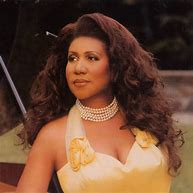
  Download Instrumental    If you singers out there haven’t been performing any Aretha Franklin songs, then you’ll have to put at least one in your repertoire now. And this is the one to do. I quickly put together an arrangement and I think these backup tracks will serve you well – once you take out the lead flute, of course.

Aretha passed away last week from pancreatic cancer on the same date Elvis died.  There’s a certain irony to that, I think.  Two giants of the music industry departing this life on the same calendar day gives one pause to consider the cosmic implications of it all.  I’ve never been one to believe much in coincidence.  But that’s just me.

Aretha’s church background is very evident in this piece.  The first few piano licks definitely have that “gospel” feeling, and the original recording sounds like an old piano being played in a 1st Baptist church somewhere (has there ever been a Last Baptist Church?).  It was written by Carole King and Gerry Goffin at the request of Franklin’s producer.  The arrangement was simple, using only bass, drums, piano and strings.  Oh, and a haunting French horn slips in and out of the music like a mischevious ghost – beautiful.  Aretha’s sisters – Erma and Carolyn – sing the backups.   But it was her voice – oh, that voice – that carried the song to #2 on the charts and #1 in everyone’s memory.

Thank you, Aretha, for everything that you gave –  and everything that we’ll keep in our hearts forever.

Gimme All Your Lovin’

  Download Instrumental    Sometimes you just have to ROCK!  And when you feel that way, break out a ZZ Top tune.  Bring on the distortion guitars, a heavy bass, and pounding drums – then go for it!  And if you can’t sing all that well – doesn’t matter!  It’s all about the beat…. and the guitars.  Too bad no keyboards.  But wait!  This was the first ZZ Top song that used a keyboard synth… so all is not lost.  What you’ve got here is raw, naked  rock’n’roll with a dose of blues thrown in for good measure… and a keyboard!  I’m sold!  I really like breaking this one out on stage.  The crowd recognizes it immediately and hits the dance floor.  You gotta love that!

I encountered ZZ Top in New Orleans in 1971.  I passed an alley on Bourbon Street and heard a blues guitar coming out of the darkness in the back of the alley.  I don’t remember who I was with, but the two of us walked into that dark (and somewhat scary) place – the music drawing us like moths to a flame.  As we neared the end (it was a long alley), the drums and bass kicked in.  Then… there they were – 3 guys under a dim street light playin’ their hearts out.  I noted the odd name of the band printed on a small piece of cardboard in front of the drums – ZZ Top.  I remember thinking, “What a goofy name.  These guys aren’t going anywhere with a name like that, no matter how good they are..”  Wrong again, Dave…. as usual.

I worked for weeks on this arrangement.  It ain’t easy imitating the sound of a distortion guitar on a keyboard, but I came close.  I toiled far into the night in my dingy little studio – half empty bottle of scotch close at hand, bleary-eyed, starving, blue cigar smoke billowing toward the ceiling, wife pounding on the locked door – but I was willing to sacrifice anything to get this song right.  I fell short, but it was a noble undertaking.

Okay…. maybe I’m exaggerating just a little.  It’s what I do.  Do the song!

Henry the 8th

  Download Instrumental    The “bridge” of a song is a contrasting section (usually 8 bars) that prepares you for a return to the regular verse and chorus.  It gives the listener a break from just hearing verses and a chorus over and over again.  This song has no “bridge’ – or even a verse for that matter.  It is only the chorus sung repeatedly (3 times) to the irritation of everyone – “second verse, same as the first”.  How Herman’s Hermits had a #1 hit with this one in 1965 is beyond me.  It is, however, quite “catchy” and that sometimes catapults a song into music history forever.  You’ll only use this as an occasional novelty tune, but put it in your repertoire anyway.  People seem to get a kick out it.

“I’m Henry the Eighth, I Am” was written in 1910 and was the signature song of a British music hall star named Harry Champion.  It was a parody on British royalty where a common man suddenly becomes king…. and likes it!  The end of one verse proclaims “I sat upon the bucket that the common think their own/Surrounded by my subjects I was sitting on the throne/Out came the potman, saying, ‘Go on, home to bed’/Said I, ‘Now say another word and off’ll go your head!”  After that came the chorus, which is the familiar “I’m Henry the Eighth, I am” that Herman’s Hermits made so popular 55 years later.

The real Henry VIII was the King of England from 1509 until his death in 1547.  Henry had six wives, the most famous being Anne Boleyn, the unfortunate queen he decided to execute for treasonous adultery and incest.  He was an extravagant spender and had people banished or executed if they didn’t toe the King’s line.  What a guy.  He also looked amazingly like John McCain, doncha’ think?

You can listen to Harry Champion sing the original on the link below:

https://www.bing.com/videos/search?q=harry+champion+I%27m+henry+the+eight+video&view=detail&mid=F0AD211C30124B4195AEF0AD211C30124B4195AE&FORM=VIRE

What a Fool Believes

  Download Instrumental    Every hit song has that mysterious “groove” that launches it into success on the charts.  The groove here is the interplay between the drums and the piano (drums providing just a good steady beat – no fancy fills – I like that).  Keyboardist  Michael McDonald was a master of the “groove”, and he brought that talent to The Doobie Brothers in 1976.  Their sound changed considerably after he joined the band – much to the better, I must say.

McDonald wrote “What a Fool Believes” with the help of Kenny Loggins, a long-time friend.  I don’t know if the lyrics draw from a personal experience that Michael had somewhere along the line, but I would guess that had to be the case.  In the song, two former lovers happen to meet in a restaurant.  He’s ready to restart the relationship but she, unfortunately, is not so eager.  He pretty much makes a fool of himself over the main entrée, and when she excuses herself to leave he just doesn’t get the message.  He faces the sad reality that she has moved on – he hasn’t.

Now, on that happy note, we’ll move on too. There were two members of the original  Doobie Brothers who didn’t appreciate the softer sound that McDonald brought to the group.  That’s fairly evident in the video below.  Jeff Baxter, lead guitarist, actually sits during the performance – ever seen a lead guitar player SIT?  The smirk on his face about halfway through the video is fairly indicative of his displeasure with not playing the hard rock biker tunes he was used to.  But it was all money in the bank, Jeff… money in the bank.

https://www.bing.com/videos/search?q=what+a+fool+believes+video&view=detail&mid=3A2389D79128484941093A2389D7912848494109&FORM=VIRE