Fun With Big Band

  Download   You should always hum this tune as you board an airplane – it will ease your mind and calm your nerves.  It’s like singing the “Love Boat Theme” just before you set off on a cruise.  Puts you in the right mood for your next adventure.  Singers without a band,  this one is well worth working up for your repertoire.

Jimmy Van Heusen and Sammy Cahn wrote several tunes for Sinatra, but “Come Fly With Me” was by far the most popular.  It came at a time when  America was in the process of picking up the pieces from World War II – looking for the good life after years of horror and frustration.  This song touted a “good times” philosophy that was so badly needed at that time in our history.  And who better to bring it on than Sinatra?  The country was changing, and Frank was doing his part to help it along.

My Yamaha is ideally suited for arranging Big Band tunes.  The trumpets are crisp and sharp, and the trombone voicing is deep and not the least bit “muddy”. However,  I like the sound of an entire saxophone section playing underneath the melody, but it was such a hassle – dedicating 3 or possibly 4 tracks to different horns (alto, tenor, and baritone) and having to play each part separately. But while mixing this piece, I discovered (well, whad’ya know) something called a SAX SECTION.  It dumps all the saxophones together and it only has to be played once!  Who knew?  Not me.  I’ve never been one to read directions, much to Karen’s chagrin.  Life is so much better now.

The sax section comes in prominently at about the halfway point of the song.  Wait for it… there!  See how it tucks in so nicely under the melody line.  So cool.

He’ll Have To Go

  Download   “Put your sweet lips a little closer to the phone/Let’s pretend that we’re together, all alone”.  Those are the clever and provocative lyrics that open this classic country tune. And then it’s “you can tell your friend there with you – he’ll have to go”.  Well, crap!!  Another man is right there with her and our hero is calling anyway!  “Should I hang up or will you tell him – he’ll have to go?”  Oh, wow!  This has all the makings of a terrific country soap opera… and possible double homicide.  And she thought she was getting away with something.  Surprise!

This was a huge hit, and I do mean HUGE, for Jim Reeves in 1960.  It didn’t hurt that Floyd Cramer was there for the piano track and the Anita Kerr Singers provided background vocals.  It was written by one Joe Allison, who was inspired to write the song by his wife, Audrey.  It seems that whenever Joe called Audrey, her voice was so soft he constantly had to remind her to put her mouth closer to the phone.  Joe, you gullible son of a gun, if you believe that… well, never mind.  My guess is she just didn’t want to wake up the other guy.

Here’s an interesting aside:  Elvis recorded his version of  “He’ll Have to Go” in October of 1976 at his last recording session.  It’s said that it was the final song he ever recorded in a studio setting.  Life is just full of ironies, isn’t it?


That’s Life

thkoxfwae5  Download Instrumental   Whenever you sit down to arrange a song, you have to sort of channel the original artist and let your mind shift into the mood you want to create.  For example, if you’re arranging a Jimmy Buffett tune, you might imagine yourself on a faraway beach with a steel drum band behind you.  Or maybe you’re doing “Stayin’ Alive” by the Bee Gees, in which case you would place yourself in a 70’s disco trying to fill the dance floor.  Every song inspires a certain mood and the frame of mind of the arranger determines that mood.

For this Frank Sinatra classic, “That’s Life”, I put myself in a New Orleans speakeasy (there’s an old word I just love) around midnight and I’m on my fifth Hurricane.   The stage lights go down and out walks the great Al Hirt – which is quite an accomplishment since he passed in 1999.  But this is imagination for inspiration, so you’re allowed some leeway in the “alive or dead”  department. The man picks up his trumpet and utters one word into the mic…”Sinatra”, before he brings the horn to his lips. And there you go… the arrangement writes itself now.  You’ve already done the hard part.

I also stole an idea from Michael Buble (he’s still alive) for this piece.  Toward the end, a terrific backup chorus takes this arrangement out by crooning “That’s Life” in a sultry gospel style that is pure genius.  Forget the Sinatra version – try mine instead the next time you perform this one.  Use your imagination…

Easy

thf0bzgmpi  Download   If you’re of a certain age, you have a favorite Lionel Richie song,  perhaps ” Still” or “Hello” or “All Night Long”.  I think this one is his best by far.

“Easy” was written by Richie in 1977 while he was lead singer with The Commodores.  The band had previously been considered a “funk” group, but this tune brought them over to the Adult Contemporary side of the music biz.  It went to #1 on the charts almost immediately, which prompted them to follow up with softer hits like “Three Times a Lady”.  When Lionel left The Commodores in 1981, he soon became a Soft Rock superstar in his own right.

I arranged this piece with a solo performer in mind.  The backup vocals were nothing but a bunch of “ahhhs” anyway, so I just used trombones to fill in the blanks.   If you are the only member of your band, you’ll still have a nice full sound behind you.  And the cash at the end of the night is all yours – that’s a very good thing.


Sweet Little Sixteen

thh8ri0iww  Download   For years, every time I heard Chuck Berry do this song, it reminded me of another song but I could never quite put my finger on it.  Then, I heard The Beach Boys do “Surfin’ USA” and there it was – the exact melody line stolen from “Sweet Little Sixteen”.  After a little research, I discovered that Berry sued that way over-rated beach band for plagiarism…  and won.  No money though, just composing credit.  Think I’d have gone for a little cash, myself.  Just sayin’…

There’s nothing even a little bit lascivious in this song, though some may insist the word “underage” should come to mind.  Actually, while on a package tour in 1958, Berry encountered a young teenage girl who was relentless about getting an autograph from every headliner in the show.  She didn’t even see the performances since she was so intent on getting those signatures.  Hence the lyrics in the song  “Sweet little sixteen – she just got to have – about half a million – framed autographs”.

This the only Chuck Berry tune that doesn’t really feature a guitar.  The piano shines throughout (Jerry Lee Lewis style) – which suited me fine.  Even without the typical Berry guitar solo, this one was his second biggest hit.  The biggest?  “My Ding-a-Ling”, of all things.  Go figure.  It was one of those songs that all the fuddy-duddies wanted banned from the airwaves.  Surprise!! Number one hit!   Don’cha just love irony?

Now, I think I’ll take my little ding-a-ling and mosey on home…

Shining Star

untitled  Download Instrumental   Time to get funky, folks!  And you don’t get much funkier (is that a word?) than Earth, Wind, & Fire.  This will please your crowd like nobody’s business, even if it’s a bunch of millennials.  They simply cannot resist this beat.

Maurice White wrote this piece for E,W&F while taking a stroll beneath a starry sky during a break in the recording of another one of their hits, “That’s the Way of the World”.  He came back into the studio with half the lyrics already in his head and the band finished the rest of it.  “Shining Star” was their first number one hit in 1975, and is a perfect example of “funk” finally breaking into mainstream music.  The song is noted for the ending, where after repeated choruses the band drops out and the group sings the final line a cappella and then suddenly, without warning, the song is over.  Surprise!

I had to use 15 tracks to get the instrumentation right.  They are, starting with track 1:  electric piano, bass, rhythm guitar, lead guitar, voice lead, organ, another rhythm guitar, overdrive guitar, tuba (yes, tuba), drums, French horn, trumpet, brass section, trombone, and sax.  Whew!  If you download this sequence and intend to perform it, you’ll have an irresistible urge to tweak the mix.  Please don’t!  Like my Dad always says, don’t mess with what ain’t broke!  Thank you…

Cheeseburger in Paradise

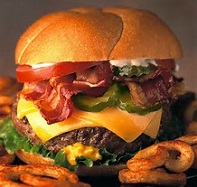
theqerc9pf  Download MP3   In one of our local, somewhat tawdry, beach bars, we used to have a woman request this song every time she came in.  She really didn’t need to, as we played this classic at least twice every night.  She would order a cheeseburger, wait for the first few notes, then dance with her burger.  Everybody thought this was hilarious – just made me hungry.  To this day, every time I see a “Hardees” commercial I think of her flailing around on the dance floor – lettuce and tomatoes flying in the air and clutching that dill pickle in her left hand.  Must have been something terribly symbolic for her – I don’t wanna know.

Jimmy Buffett released “Cheeseburger in Paradise” in 1978 and it reached #32 on the Billboard Hot 100.  It may not have been the hit it should have, but it’s still one of Buffett’s “Big 8” – the eight songs that he has to perform every concert to keep his fans happy.  I’m sure he doesn’t mind.  There have been rumors he wrote the song for some particular restaurant he ate at or cooked in along the Gulf Coast, but not so.

In his younger days as a sailor, he and his crew ran into some rough weather off the coast of Puerto Rico.  The boat was disabled, so they limped along for days eating nothing but canned food and peanut butter.  The image of a piping hot cheeseburger kept popping into his head as he shoved another cracker and peanut butter in his mouth.  After six days of this, they finally landed on the tiny island of Tortola.  At the end of the dock, like a mirage, was a brand new marina and bar that featured American cheeseburgers.  Now Jimmy had a hit song.

According to the lyrics, the man wants his burger “medium rare with muenster’d be nice”.  Muenster?  As in the cheese?  Well, crap!  I’ve been singing with “mustard” all these years!  Boy, the things you find out when you do a little research.  Should have just asked Alexa.

I Only Have Eyes For You

untitled  Download Instrumental   This jazz standard has quite the history. Written in 1934 for the musical Dames, it’s an absolutely wonderful piece of music with a chord progression that is delightful to play.  Lots of augmented fifths and diminished 7ths in a jazz score.  And the melody line is smooth like butter.  “I Only Have Eyes for You” is just one of the best songs ever.

But it didn’t start out that way.  Dick Powell and Ruby Keeler introduced the song in Dames,  but it was just horrible (sorry, but it was).  But the beauty of the song was there, and it was  25 years before somebody recognized that fact.  Finally, in 1959, The Flamingos recorded a version that was close to what the song should have been.  The addition of the background vocals “sha bop sha bop” was really not a good thing, and certainly unnecessary.  Just play it straight, please.  Without all the “bebop” additions, the song sells itself.  It’s beautiful – ya don’t have to screw with it!  And Art Garfunkel should have stayed away from it completely.

This is our version and it’s always worked for a crowd that was ready to dance close.  And “close dancing” is ALWAYS a good thing… especially on Valentine’s Day.

Twist ‘Til Ya Drop…

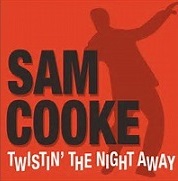
thb8erblew  Download MP3 Here   The great Sam Cooke had several huge hits in the early ’60s, among them “Another Saturday Night”, “Cupid”, “You Send Me”,  and this gem – “Twistin’ the Night Away”.  He was born Samuel Cook in 1931 and died (or rather was killed) just 33 years later.  The circumstances of his death don’t make for a pretty story and are disputed to this day.  You can “google” it if you’re curious.  He added the “e” to his last name in 1957 because he thought it was classier and would make him more appealing to white audiences.  Didn’t need the extra letter, Sam… your voice was all you needed.

Sam recorded “Twistin’ the Night Away” in 1962 using the best studio musicians in L.A. at the time – The Wrecking Crew.  Kind of an odd name for such a fine group of musicians, but it didn’t hurt their popularity.  They were the backup/studio band for just about everybody back then.  The likes of The Beach Boys,  Sonny & Cher, and Frank Sinatra used these session players in almost all of their recordings.  And they were the only musicians behind The Monkees since those boys couldn’t play an instrument to save their lives.

Nobody “twists” anymore (sad), but if invited to do so by a savvy bar band, they’ll do it forever.  That’s why I made this arrangement longer than usual.  It includes piano, sax, trumpet, and organ solos just to stretch it out a bit.  Give this one a shot at your next gig – they’ll twist ’til they drop.

Takin’ Care of Business

th34zlfec7  Download Instrumental   “Get off your seats and on your feets” is what we used as an introduction to one of the greatest rock dance tunes ever.  If this one doesn’t get ’em on your dance floor, you might as well pack up your amps and go home.

This is old time, head-bashing rock’n’roll – the same three chords played over and over again (in this case C, Bb, and F).  But the drum breaks and the guitar solos are fun and guaranteed to get the crowd going.  “Taking Care of Business” was written by Randy Bachman of Bachman-Turner Overdrive fame in 1967.  Bachman was inspired to write the song from a Beatles recording called “Paperback Writer”, a musical story about a man writing paperback novels for a living.  “Business” may initially seem like an ode to the working man, but was really more of a slam against people who actually do work for a living.  “I love to work at nothing all day” is a great line for musicians who, as everybody knows, don’t have to labor for their money.  Right.  Let me tell you something…. oh, never mind.

The piano track was played by a guy delivering pizza to the studio where BTO was struggling to get this song recorded.  He told them it needed piano and he just happened to be a piano player.  They laughed, tipped him, and sent him on his way.  Hours later, still trying to figure out what to add to those three endless chords, they tracked him down and he got his 15 minutes of fame (except nobody knows his name).  The piano saved the day… as it always does.

I’ve seen pictures of Elvis wearing a “TCB” necklace.  Makes me wonder if those letters have anything to do with this song.  I mean, if anybody “took care of business”, it was “The King”.