Download Instrumental Let’s switch gears for a moment. You’re not playing a raucous Halloween bash at the Elks Lodge in Fairhope. Your gig is Bucky’s Birdcage Lounge at the Grand Hotel in Point Clear. This calls for a little more laid-back approach.
“Witchcraft” was released by Frank Sinatra in May of 1957. He recorded the song three times in a studio setting. The first in ’57 as a single, then re-recorded it in 1963 on his album Sinatra’s Sinatra. Finally, in 1993, he went back into the studio and trotted it out one more time with Anita Baker on his Duets album. It’s a standard jazz favorite and will work well at the Grand Hotel.
I kept the arrangement simple. You’ll only get one chord on the piano to set your key, so be prepared to jump right in. They’ll love this at The Grand or anywhere else with a touch of class.
Download Instrumental Sometimes in your life you have to look back and wonder how you could have been so stupid. While I was stationed at Scott Air Force Base, I played in the dining room of the Officer’s Club two nights a week. There was always this light colonel who would walk by and say “I wanna be around to pick up the pieces” and then amble off to his table. This went on for at least a year. I thought it was some kind of veiled threat, like “What is this staff sergeant doing in here? Don’t we have a lieutenant who can play piano?” I didn’t know he was requesting a song – I’d never heard of it. It was years later before I heard Tony Bennett croon it on Johnny Carson. What a schmuck I was. I wish I could find that colonel now. I’d play the song, throw a salute and bark, “Request granted, SIR!”
Sadie Vimmerstedt. Not exactly a household name, is it? But she was responsible for one of the best jazz standards ever written. Seems ol’ Sadie was a beautician in Youngstown, Ohio and extremely upset with Frank Sinatra for leaving his wife to marry Ava Gardner. Really… who cares? Well, Sadie did. She was quite pleased when Ava turned around and left Frank, so she decided to send an idea for a song to the famous songwriter Johnny Mercer. In her letter to Mercer, she included the first line of the tune she wanted him to write: “I wanna be around to pick up the pieces/when somebody breaks your heart”. Mercer ran with the idea and soon had a hit song on his hands when Bennett recorded it in 1963. Being the professional that he was and an all around nice guy, Mercer cut Sadie in on half the royalties. You just never know, do ya?
I decided to use an arrangement in the style it should be – Big Band. Notice the trombone solo in the middle and the sax taking it out at the end. It’s easy to class it up when you’re working with a song this good. If you’re going to use these backups onstage, make sure you’ve got the chops for it. It’s not the easiest song to sing. If you can do it, great! If not…. don’t even try.
Download Instrumental This song is an acquired taste – much like 12-year-old Scotch and pickled pigs feet. This particular tune is what I call a “three S’er” – subtle, sultry and sexy. In this case you could also add sophisticated, which would put it in the very rare category of “four S’er”. Are you following this? Doesn’t matter. This Latin-flavored masterpiece just oozes steamy romance (there’s another S) and it’s a beautiful thing when all those emotions are put to music.
“Sweetest Taboo” was recorded in 1985 by the British-Nigerian singer Helen Folasade Adu – better known by her professional name Sade. She thought it would be a good idea to name her band “Sade” as well, which I think is just a bit narcissistic. (that would be like me forming another band and calling it “David”… hmmm). I just noticed that there are three S’s in the word narcissistic – coincidence?
There are a variety of rumors that seek to explain the meaning of “Sweetest Taboo”. What is this taboo that she finds so sweet? Some say it’s an addiction to heroin (seems like drugs are always lurking somewhere in the background). Others maintain it was a lesbian relationship – certainly taboo back in the day. But these people would be wrong. In the music video, she lusts after a man who is obviously involved with another woman – most likely his wife – and that’s certainly frowned upon, even today. That’s my interpretation and I’m sticking to it.
If you’ve got the Sophistication to pull this one off onstage, you need to be performing this jazz crossover hit. Three repetitive chords on a midi grand piano pretty much carry the song and the rhythm track is oh, so interesting. The backup vocals are Subtle and the lead line is best described as Sultry. The lady is certainly Sexy – so you have all the components you need to “Wow” your audience. Go for it!
Download Instrumental You have to love a song that just builds and builds… and then builds some more. It begins softly with piano and violins, then the lead vocal comes in, more violins and a cello. Bring in bass, drums and guitars to take it to a smashing crescendo – when it drops to only piano and violins again with an ending so gentle it seems to blow away like a puff of wind. This is that song.
Michael Buble released “Hold On” in 2009. He penned the lyrics and his pianist, Alan Chang, created the melody and instrumentation. It didn’t do all that well commercially – peaking at #9 on Billboard’s “Adult Contemporary” chart – but hardcore Buble fans love it. If you decide to perform this one (and you should) most of your audience will have never heard of it. That’s okay… tell ’em you wrote it.
Buble (he called himself Mickey Bubbles at the start of his career) never learned to write or read music and claimed his songwriting abilities came purely from emotion. That is certainly evident here. “Hold On” is about two good friends who decide to become lovers. They quickly realized they were being foolish and were able to get back to “good friend” status, something difficult to do after a love affair. But people need to hold on to each other – especially family and friends. “We are stronger here together/than we could ever be alone”. Good advice for all of us, except you might want to skip the “let’s hop in bed” part. That never seems to work out…
Download Instrumental The biggest kick I get out of creating these backing tracks is coming up with a “big band” arrangement. I think every song should be altered to sound like Glenn Miller in the 40’s. I once took “Bad, Bad, Leroy Brown” and put an entire brass section behind it. Sadly, it really sucked. Even tried to perform it (on a dare) and the crowd went “huh?”. I now have it in my archives, filed under “Never Do This Again”.
Ah, but this song SCREAMS for a trombone, saxophones, and trumpets. “Stormy Weather” was first performed by Ehel Waters in 1933 at The Cotton Club in Harlem. When Ms. Waters stepped to the middle of the floor at this iconic club way back when, she said she was singing “from the depths of my private hell in which I was being crushed and suffocated”. At the time, she was speaking more of friends and business associates who had betrayed her, rather than the absence of a man in her life – “Stormy weather, since my man and I ain’t together – keeps rainin’ all the time”. No matter who she was singing to, the misery and sadness in this song made it an instant classic, eventually recorded by every artist who had a soul…. or claimed to.
I have a setting on my arranger keyboard called “raunchy brass”. I elected to use this voicing because I think “raunchy’ can be translated to “sexy” (that explains a lot). It’s the sound of the trombone that captivated me, and it fits well with the overall aura of this masterpiece. Okay, I may have taken some liberty with the melody on the last verse, but you singers can do with it what you want… just make it sexy is all I ask.
Download Instrumental Sandwich this one between two heavy-duty songs for a nice contrast and to give your dancers a break. It’s a simple arrangement with only piano, bass and drums – the classic hotel lobby trio – and I used a clarinet for the lead vocal.. You, the singer, are going to sell this one with your clever inflections on the lyrics.
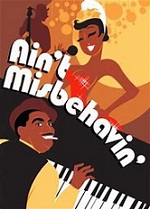
“Ain’t Misbehavin” was written by the great Fats Waller with lyricist Andy Razaf. The tune is a classic example of “stride jazz”, a piano technique that is almost ragtime, but much more innovative. The left hand alternates between a single note and a chord, giving the rhythm kind of an “oom-pah” feel while the right hand plays a syncopated melody in and around what the left hand is doing. Quite fun, really, but ya gotta be able to separate your brain into two altogether different factions. In other words, if you can’t walk and chew gum at the same time, forget about it.
The lyrics are the heart and soul of this classic. The singer is lonely: “No one to talk with/all by myself”. However, he’s quite “happy on a shelf”. He swears he’s not staying out late or carousing with other women: “I’m through with flirtin’, it’s just you I’m thinkin’ of” (a paragon of virtue is our hero). “I don’t stay out late, don’t care to go/I’m home about eight, just me and my radio” (what a guy). “Ain’t misbehavin’/I’m saving my love for you” is the refrain repeated four times and pretty much wraps up the gist of this little ditty. I believe him.
Oh, by the way, Fats Waller wrote this while in jail on an alimony charge. I don’t think he had much choice but to “behave”. Doesn’t matter – this is a great song that never gets old and can be performed by a male or female – just change the pronouns. Watch Fats perform “Ain’t Misbehavin” on the link below (with a funky little twist in the middle”.
Download Instrumental Nothing says “Big Band” better than Glenn Miller. Mr. Miller first recorded “Moonlight Serenade” as an instrumental, although lyrics had already been written for his melody. It was released as the B-side to a song called “Sunrise Serenade” (do we detect a theme here?), but “Moonlight” was far more popular – proving to be The Glenn Miller Band’s breakout hit. In 1959, a doo-wop group called The Rivieras recorded it with vocals and it had modest success. Then, Sinatra got the nod in ’66 and his version went straight to the top of the charts. Personally, I preferred Carly Simon’s take on this song – which is what I used as a basis for this arrangement.
Glenn Miller was the best-selling recording artist from 1939 until 1944. He had 23 number one hits in just four years – more than Elvis or The Beatles had in their entire careers. His band churned out gems like “In the Mood”, “At Last”, “Chattanooga Choo Choo” and “A String of Pearls” like an assembly line of Big Band classics. His secret to developing that signature “Glenn Miller” sound was to let a clarinet take the melody line with a tenor sax playing the same notes – then having three other saxophones providing harmony underneath it all. This unique style differentiated him from all the other big bands playing the late 30’s. That’s all it takes, folks – just be different from everybody else. Hell, I should be a superstar!
In 1944 during World War II, Miller flew from the United Kingdom to France to make arrangements to move his entire band to Paris. The plan was to entertain the troops there for a month, then head back to the United States for a much-needed rest. It was foggy and cold (typical England) and the plane was flying low. Suddenly, it just vanished – presumably plunging into The English Channel. Glenn Miller was never seen again. The mystery of his death takes many twists and turns and to this day nobody knows exactly what happened. It could have been as simple as the engines freezing up – or Allied planes returning from a mission discarding their unused bombs over Miller’s plane – or even a dark theory that he was involved in espionage somehow. We may never know for sure, but at least we’ve got “Moonlight Serenade”. Unlike most of the trash passing for music today, the “Miller Sound” will last forever.
Download Instrumental Just what is the “Jitterbug” anyway? Anyone over 50 knows that it’s a dance (it’s also a fishing lure but that’s of little consequence here). Cab Calloway introduced the term “jitterbug” in his 1934 hit Call of the Jitterbug. Apparently, there is a strong relationship between jitterbug dancers and liquor – the first line of Cab’s song is “If you’d like to be a jitter bug, first thing you must do is get a jug”. If you’ve seen the dance, you know there has to be a jug involved somewhere.
Whenever anyone asked us to do a jitterbug tune, we’d trot out “Shake, Rattle, and Roll” or this one – “Jump, Jive and Wail”. This was the more interesting of the two. I get a kick out of arranging big band music anyway – so many instruments, so little time – but the beat is what makes this a terrific jitterbug swing number. Louis Prima came out with this one in 1956, then due to a resurgence of swing in the 90’s, The Brian Seltzer Orchestra (love that band) re-recorded it and made it into something way more hip.
So, the next time someone cries out “Jitterbug”, it’s not time to find an exterminator – it’s time to play “Jump, Jive and Wail” and watch them hit the dance floor. You know that’s what you want them to do…. and tip.
You might see a little jiggerbugging on the link below:
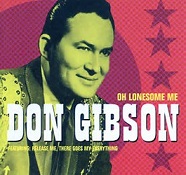
Download Instrumental Don Gibson wrote “Sweet Dreams” for Patsy Cline, “I Can’t Stop Loving You” for Ray Charles, and this one for himself. He recorded “Oh, Lonesome Me” in 1957 and since then every country artist on the planet has redone it in their own peculiar way. Some of their renditions are good, but others just suck. I’ve always really liked the tune, but never once performed it. Must be a reason for that. Yeah… it’s just a hair too country.
I heard a version of this by Ray Price the other day and liked it because he threw in some violins and brass. But it was still definitely “country”. I sat down to do his arrangement, but halfway through my work I realized the lead instrument didn’t have to be a steel guitar. I kept hearing a clarinet playing around underneath the melody instead of the guitar. So I thought, “Why not Dixieland?” Yes, Dixieland. I live a hop, skip, and a jump from New Orleans – so sue me. Can’t help it – my keyboard has a great clarinet voice.
So if you want to perform this classic country tune like your audience has never heard it before, give these backups a shot on your next gig. Pete Fountain, eat your heart out. My apologies to Mr. Gibson.
Download Instrumental It’s a sad time in the music world. Walter Becker passed away last week from an undisclosed illness. He was only 67. Rarely does a death in the music industry affect me so greatly. It happened with John Lennon, then Harry Chapin, and now Walter Becker. But, at some point in time, we all must carry on without our heroes. I don’t have any left. Sad.
Becker and Donald Fagen were the core members of Steely Dan, a hugely successful band of the 70’s – my favorite group from that decade. The music was a cerebral combination of rock and jazz, with a little R&B mixed in for good measure. Sophisticated rock, I would call it. The music was complicated and, I thought, difficult to play. The lyrics were cryptic and quite sarcastic at times – but oh, so interesting. Becker played bass and lead guitar while Fagen handled the keyboards and lead vocals. And that was pretty much the whole band. They used studio musicians for any other instrumentation and none of those guys were ever considered to be a part of Steely Dan – that’s just how cerebral they were. Kinda snobby, really, but who cared? The music was outrageously good!
“Rikki, Don’t Lose That Number” was released in 1974 and was their most successful single. Donald Fagen met a New York artist at a college party named Rikki Ducornet. Even though she was married and pregnant at the time, Fagen wrote down his phone number and gave it to her before he left the party. She was tempted to call him but, alas, never did. Hence, the song. Rumor has it that Becker was interested in her too, so the idea of them collaborating on this song is intriguing. Ah, musicians…. they’re a sordid lot.
And speaking of “sordid”, I won’t tell you how Steely Dan came up with their name. You can google that one yourself.

 Download Instrumental Let’s switch gears for a moment. You’re not playing a raucous Halloween bash at the Elks Lodge in Fairhope. Your gig is Bucky’s Birdcage Lounge at the Grand Hotel in Point Clear. This calls for a little more laid-back approach.





 Stageworthy Backing Tracks by Dave Zobrist