God Bless the USA

Download Instrumental    While growing up on a farm in California, country singer Lee Greenwood was taught little nuggets of wisdom like “your handshake is your word” and “you help your neighbor when he needs help”. Sounds a bit old-fashioned now, but it shouldn’t. He could see those basic decencies slipping away and longed to write a song about the America he loved. Lee felt his country embodied the ideas that were good and honorable about all people and the freedom that went along with that.  He wrote “God Bless the USA” in 1983 and it became one of the most played patriotic songs of all time.

The first time America heard this tune was halfway through a Lee Greenwood concert in ’83.  The crowd went crazy – on their feet and applauding before he even finished the song.   He soon had to move it to the end of his concerts as an encore because he felt like he “just couldn’t follow it up with another song”.

Many conservative politicians (why not liberals, you might ask) used “God Bless the USA” in their campaigns, including Reagan, both Bushes, and now at every Trump rally.  It was played in ’91 at the beginning of the Iraq war and especially after the twin towers came down in New York.  This is a song for the ages – and Lee Greenwood is a rich man today.  Only in America….

Watch The Story of “God Bless the USA” below:
https://www.youtube.com/watch?v=oD_IICmMhO0

Garden Party

 Download Instrumental if you like…    We’ve got a gig coming up that the host calls a “garden party”. There’s something about partying in a garden that doesn’t quite ring true to me, but this classic tune by Ricky Nelson just has to be performed.  “Garden Party” was Nelson’s biggest hit.

If you remember a TV show called “The Adventures of Ozzie and Harriet“, you’re older than dirt.  I only remember it from reruns, so I guess I’m still a youngster.  Ricky starred with his parents in this late 50’s sitcom and was often featured playing a guitar and singing his little heart out.  He soon became a teen idol with an impressive string of hits.  But because The Beatles dominated the music scene in the 60’s, Ricky Nelson wasn’t much in demand anymore – much like Bobby Rydell and The Beach Boys.  The “British invasion” took out a lot of American stars.  In my humble opinion, it was worth it.  The music industry is fickle at best.

In 1971, our hero was invited to play in an “oldies” concert at Madison Square Garden.  He was booed off the stage.  The crowd showed up ready to hear the old hits they remembered from their teen years, but Nelson chose to play new tunes and, worse yet, he’d let his hair grow long – what a cad! He did do a couple of his hits – “Hello, Mary Lou” for one – but when he swung into “Honky Tonk Women” the audience turned on him.  He abruptly ended his performance and stalked off, declaring that “he’d rather drive a truck”.  Really, Ricky?

But he couldn’t let that kind of humiliation go – so he wrote a song about it – this one.  The lyrics tell the whole story with such choice lines as “When I got to the garden party, they all knew my name/no one recognized me, I didn’t look the same”.  And then there’s “I said hello to Mary Lou, she belongs to me/but when I sang a song about a honky tonk, it was time to leave”.  Kinda sad, isn’t it?  The classic final line is “But if memories were all I sang, I’d rather drive a truck”.

This is probably one of the most personal songs ever written.  Though not exactly exciting or even danceable,   I think it’ll be worth performing at this upcoming “garden party” job we’ve got.  If it doesn’t go well, I’ll just buy me a brand new F-150 and be done with it.


Sweet Dreams

Download Instrumental    On Feb. 5th, 1963, Patsy Cline sat sobbing in a Nashville recording studio.  She didn’t want violins in a song called “Sweet Dreams” because she was sure her fans would hate the idea.  It just wasn’t the conventional country arrangement of three guitars and a drum set.  But when she heard the playback, she could tell the raw emotions she had poured into the song were further enhanced by the strings.  She loved it!  And burst into tears.  There’s no explaining the intricacies of a woman’s mind and heart.  A month later she would die in a plane crash.

Country songwriter Don Gibson originally recorded “Sweet Dreams” in 1955, but his version was eclipsed by Faron Young’s rendition.   Don had stupidly given recording rights to Young (until today, I couldn’t have told you one song that Faron Young recorded).  Gibson recorded it again in 1960 and managed to get it into the “Top Ten”.  Patsy Cline covered it in ’63 and most people to this day associate the song with her.  However, a swamp pop musician from Louisiana named Tommy McLain scored the  biggest hit with “Sweet Dreams” in 1966.  What’s swamp pop, you might ask.  It’s a genre of music that combines New Orleans rhythm and blues with country western and Cajun influences.  Sounds like a rollicking good time to me!

There was a party that night after Patsy Cline finished recording this tune.  At one point, they were all listening to her sing “Sweet Dreams”, which was going on her latest album Faded Love.  Patsy listened intently, then held up her very first album and pointed to the newest tracks playing in the recording booth – she laughed and said, “Well, here it is… the first and the last”.  And so it was.  Sweet dreams, Patsy.

The story of her life and death on the link below:

https://www.bing.com/videos/search?q=sweet+dreams+patsy+cline+video&&view=detail&mid=C35BA14BFDBE2D46879CC35BA14BFDBE2D46879C&&FORM=VDRVRV

(Take Me Home) Country Roads

Download Instrumental   Meet the Danoffs, Bill and Taffy.  Taffy?  Who names their kid after a piece of candy?  Well, I once knew a drummer named “Heath” so maybe it’s not so unusual.  Anyway, “The Danoffs” were working as a folk duo in 1970 at a small club in Washington D.C. with a young chap named John Denver.  After the show one night, they all went back to the Danoff’s apartment and they played a song for John that wasn’t quite complete.  He helped them finish what they called “Country Roads” and they played it together the next night at the club to a standing ovation.  Denver immediately stole the song.

Bill Danoff had never been to West Virginia and originally was going to use his home state of Massachusettes in the lyrics but decided it wasn’t musical enough (even though it had the requisite four syllables and would have fit).  Nobody much relates country roads to Massachusettes anyway, so West Virginia was an excellent choice.  Denver hadn’t been to either state but knew a hit song when he heard one.

I didn’t particularly care for John Denver’s “folksy” take on the tune, but then I heard a guy who called himself “The King” do it in a country rock style that I liked so much better.  His name was James Brown – no, not that James Brown – and he made a career out of recording songs that he thought Elvis should have done.  Try this arrangement on your audience and they’ll love it – unless you’re in West Virginia.  They take this tune very seriously there…

Help Me Make it Through the Night

 Download Instrumental   In the latter part of 1969, a young lad named Kris Kristofferson went about his work at Columbia Records in Nashville. His primary job description included sweeping floors and emptying ashtrays.  Kris was a Rhodes Scholar.   He was a Golden Gloves boxer.  He was a commercial helicopter pilot.  He had recently turned down a teaching position at West Point to take this job in Nashville.  Why?  His first love was country music song-writing and he intended to make a go of it.  And make a go of it he did!

Songs like “For the Good Times”, “Me and Bobby McGee” and “Sunday Mornin’ Comin” Down” were all Kristofferson hits (for other artists).  But “Help Me Make it Through the Night” was what launched his career and made him a legend in the music business.  His inspiration for this classic came from, of all people, Frank Sinatra.  He had read a magazine interview where Sinatra was asked what he believed in.  Frank’s answer:  “Booze, broads, or a Bible – whatever helps me make it through the night”.  “Ol’ Blue Eyes” had a way with words, didn’t he?

This piece was covered by Sammi Smith in 1970 and it became her signature tune.  She was one of the few women in the outlaw country movement of the 70’s.  She was a gutsy little lady who didn’t care if the song was a bit risqué for a woman to sing at the time – “Take the ribbon from my hair/shake it loose and let it fall”.  Then there’s “Come and lay down by my side/till the early mornin’ light”.  Well, now.  Kristofferson won a Grammy in ’71 for this one, as did Sammi.  You just have to know a good country song when you hear one.

Michael Buble (love his arrangements, if not him) covered this piece as a duet with Loren Allred.  I used a French horn for Buble’s part and a flute for Loren’s.  These two instruments blend well, but of course you’ll have two actual human voices (always sounds better that way).  This is how we do it – with a decidedly “south of the border” feel.  Mariachi, anyone?

Singin’ the Blues

  Download Instrumental    I usually don’t like a song that has whistling in it, unless it’s the Andy Griffith theme.  Guy Mitchell had a hit with “Singin’ the Blues” way back when, but it featured whistling.  Whistling!  Whistling is singing without any words – it’s annoying..  Please don’t do that…. there’s nothing worse than someone who “whistles while they work”.  Stop it!

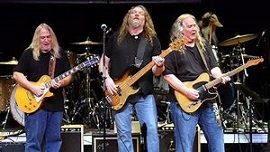
“The Kentucky Headhunters” re-recorded this one in 1997 and did it right – no whistling.  This band is one of my favorite things about the state of Kentucky.  Other favorites are Kentucky bourbon, the Derby, the State Song, and our great friends Gil and Evelyn Russell – two of the finest people on the planet.  Gil is a long-time Air Force compatriot of my father (and quite the wicked checker player).  And… my wife is a Kentucky girl – I kinda like her too.  But I digress.  The point is, it took a long-haired, good ol’ boy, country rock band from Kentucky to get the song right.  And they’re LIKABLE long-haired, good ol’ boy rockers.  Most that I’ve known are not.

The “Headhunters” are primarily a cover band with their first real hit being a cover of Don Gibson’s “Oh, Lonesome Me”.  They subsequently recorded songs by Waylon Jennings, ZZ Top, Lynyrd Skynyrd, Carl Perkins, and …uh… Roy Rogers.  They were, and are, a Southern rock band with a sense of humor.  Don’cha just love irreverence? This business should be about fun! And these guys know that.  Hey… they’re from Kentucky!  There’s nothing more to say!  Put this one in your play list and have a good time with it!  But no whistling, please.

Oh, be sure to wait for all of the ending – it’s irreverent.

And if you like whistling:

American Honky-Tonk Bar Association

  Download Instrumental    Can’t say I’m a Garth Brooks fan – never have been, probably never will be. But I like the piano riffs in this one, and that’s good enough for me to trot it out on stage.  Some of my most fun gigs have been in rowdy country bars, even though I’m not what you’d call a “country boy”. But I love the idea of a music genre that could turn into an adventure in a split second.  I remember Karen jumping between me and a guy with a knife one night.  She ended up on the floor and I didn’t…crazy woman. But that’s honky-tonk for ya!  I even like to say it.  Go ahead, say it out loud – Honky-Tonk  – now ain’t that fun?  Put this arrangement on your country set list.  The Holiday Inn crowd will love it…

“American Honky-Tonk Bar Association” reached the top of the Hot Country Songs list in 1993.  It’s sort of a redneck anthem that compares honky-tonk bars to support groups for “blue collar” people.  By today’s standards (if there are any), this tune might be considered a bit “edgy” and low on the political correctness scale – especially unfortunate lyrics like “but when your dollar goes to all those standing in a welfare line”.  But you can change the lyrics to anything you want, as long as it rhymes.  It’s the music we’re talking about here, folks.  This song is just plain fun to play – great country boogie beat, walking bass line, that piano, and even a fiddle thrown in for good measure.

The music played in the old West saloons was first referred to as “honky tonk” music.  It was usually played on an out-of-tune upright piano stuck in the corner of the bar – so as to be out of the way when the fight started (uh… been there, done that).  These days, it’s just a bar that caters to country music fans.  I think the “old west” scenario is much more colorful and romantic – where’s Miss Kitty when you need her? The first time “honky-tonk” was used in print was in the Peoria Journal on June 28, 1874.  The news story read, “The police spent a busy day today raiding the bagnios and honky tonks”.  Okay… but what’s a “bagnio”?

Cowboy Casanova

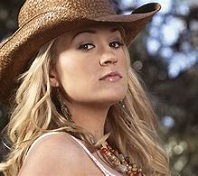
  Download Instrumental    You can’t help but love Carrie Underwood, whether you’re a fan of country music or not.  We all became aware of Ms. Underwood when she won American Idol in 2005 (yes, it was that long ago).  Her debut album proved to be the best-selling debut of a solo female artist in country music history.  The woman just oozes talent out of every pore of her body – and she’s not bad-looking either.  That’s sexist, I know, but that’s a fact, Jack.

The song “Cowboy Casanova” takes her away from her country roots to more of a rock/bawdy vaudeville/jazzy style – I would call it “sassy country” just because I like to put a label on everything.  There are growly guitar riffs that actually carry the song along, but little surprises like a fiddle and symphony strings make the arrangement quite unique.  The lyrics tell of a woman warning other women about this  handsome fella who will entice them into all sorts of lurid situations, but then will move on to another lady without a twinge of conscience:  “He looks like a cool drink of water, but he’s candy-coated misery”.  Now, looking like a glass of water doesn’t really sound all that attractive or exciting.  Seems to me the expression is a long, tall drink of water, indicating our boy was of considerable height (women love that) – however, that’s too many words to fit the music.  But, I digress…

What I like best about this tune is the driving drum track.  It will get your audience up and dancing and acting all “sassy” before you even sing a note.  It’s “country”, for sure, but it will also work in a rock’n’roll venue.  Trot this one out for your audience and they’ll love it as much as that tall, cool glass of water –  a little ice and scotch wouldn’t hurt either.


Blue Bayou

  Download Instrumental    Blue Bayou – Linda Ronstadt style.  This song came to mind when I heard a sports announcer (baseball) make a remark after the pitcher threw a fast ball strike and the batter didn’t swing.  The announcer proclaimed, “Whoa!  That was a Linda Ronstadt!”.  Say what?  What does a female rock’n’roll star have to do with baseball?  I checked it out.  What our sportscaster meant was – that fast ball “blew by you”.  Think about it…

“Blue Bayou” was written and first recorded by the great Roy Orbison in 1961, but not released until ’63.  The song peaked at a fairly respectable #29 on the American charts, but was a huge hit overseas, especially in Italy.  I don’t know, maybe they have a lot of bayous in Italy.  But in 1977, Linda Ronstadt took it and went crazy.  Her version was a hair slower with a cleaner, more pronounced beat (I chose to up the tempo a little – not quite so morose that way).  She took it to #3 on the Billboard Hot 100 and #2 on the Country charts – not to mention #3 on “Easy Listening” (never have figured out precisely what that means).  The single went Gold (1 million sold) in 1978, then soon was certified Platinum (2 million sold).  Personally, I think the key to her success with “Bayou” is the fact that Don Henley of the Eagles sang backup on the recording.  I think he was paid a hundred bucks for his contribution.   Ronstadt, you owe him big time!

This one would be a terrific addition to your repertoire.  It’s easy to dance to and very recognizable.  Surprise your crowd with this classic next Saturday night.  Batter Up!


I Saw the Light

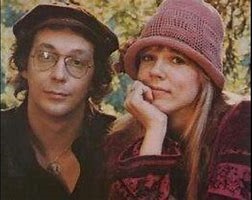
  Download Instrumental    Hank Williams was asleep and slightly inebriated in the back seat of his car. It was 1947 and he was returning to Montgomery from a show in Fort Deposit, Alabama. His mother, Lily, was at the wheel, driving Hank and his band back home as she did quite frequently.  She had put a guitar in her son’s hand at the tender age of 8 and acted as his manager until he married Audrey Shepard – who took over as his manager with a vengeance (that’s her in the picture above).

But back to the car.  It was the middle of the night and Mom spied the lights of the airport outside Montgomery in the distance. She roused ol’ Hank  and told him, “I saw the light”.  Bam! Inspiration strikes!  Hank wrote this song and had it ready to record in less than a month.  It has since become a standard country gospel tune and has been recorded by zillions of artists.

Audrey Shepard married Hank in a gas station – how romantic – and insisted on taking charge of his career.  She was also the bass player in his band.  Quite a lady, this one.   After Hank recorded “I Saw the Light”, she decided it would be better if she sang it with him.  Trouble was, she couldn’t sing a lick.  But like all bad singers, she thought she was just the best ever.  Williams reluctantly recorded another version with her, but sent a note to his producer letting him know he did NOT want that version released.  It never was, and I think we’re all the better for it.