Download Instrumental A hit for “The Casinos” in 1967. Oddly enough, they were a nine man group and it took them nine years to have success with this tune.
Email me and I’ll send you the midi file – $4.00
Meanwhile, feel free to download the instrumental MP3.
Maybe not one of Bob Seger’s best, but “Turn the Page” is certainly his most poignant. A mournful saxophone introduces us to the first stanza: ” On a long and lonesome highway, east of Omaha – you can listen to the engine moanin’ out its one note song”. The engine belongs to a tour bus carrying a rock’n’roll band relentlessly from city to city. That same saxophone takes over after the last line of the song: “Here I go, playin’ the star again – there I go… turn the page”. Seger is comparing a musician’s life on the road to life in general. There comes a time when you must turn the page and move on.
After four years of bombarding people with stories about my own experiences as a working musician and hopefully providing interesting histories of a variety of songs, I’ve determined that this will be my final blog. Oh, I’ll keep the site up and running, but I think we can lose the commentary, don’t you? I’ll keep posting new backing tracks, but the actual file that can be used onstage will be for sale so that professional singers (or amateurs for that matter) can keep these old songs alive. The sample MP3 file can still be downloaded for free by anyone who happens to like a particular song as an instrumental. I can’t possibly stop playing music and creating new tracks for other people – but I can quit talking about it.
It’s been fun, folks. I hope I’ve given someone a chuckle along the way or made you go “Hmmm – I didn’t know that”. My philosophy is that you should never believe your best days are behind you. I love discovering other things to do and I’ve always been sure that a new adventure lies just around the corner. There will soon be a new blog and more mischief.
Download Instrumental While growing up on a farm in California, country singer Lee Greenwood was taught little nuggets of wisdom like “your handshake is your word” and “you help your neighbor when he needs help”. Sounds a bit old-fashioned now, but it shouldn’t. He could see those basic decencies slipping away and longed to write a song about the America he loved. Lee felt his country embodied the ideas that were good and honorable about all people and the freedom that went along with that. He wrote “God Bless the USA” in 1983 and it became one of the most played patriotic songs of all time.
The first time America heard this tune was halfway through a Lee Greenwood concert in ’83. The crowd went crazy – on their feet and applauding before he even finished the song. He soon had to move it to the end of his concerts as an encore because he felt like he “just couldn’t follow it up with another song”.
Many conservative politicians (why not liberals, you might ask) used “God Bless the USA” in their campaigns, including Reagan, both Bushes, and now at every Trump rally. It was played in ’91 at the beginning of the Iraq war and especially after the twin towers came down in New York. This is a song for the ages – and Lee Greenwood is a rich man today. Only in America….
Download Instrumental Let’s switch gears for a moment. You’re not playing a raucous Halloween bash at the Elks Lodge in Fairhope. Your gig is Bucky’s Birdcage Lounge at the Grand Hotel in Point Clear. This calls for a little more laid-back approach.
“Witchcraft” was released by Frank Sinatra in May of 1957. He recorded the song three times in a studio setting. The first in ’57 as a single, then re-recorded it in 1963 on his album Sinatra’s Sinatra. Finally, in 1993, he went back into the studio and trotted it out one more time with Anita Baker on his Duets album. It’s a standard jazz favorite and will work well at the Grand Hotel.
I kept the arrangement simple. You’ll only get one chord on the piano to set your key, so be prepared to jump right in. They’ll love this at The Grand or anywhere else with a touch of class.
Download For all you keyboard arrangers out there, this is the time of the year to dig deep into your instrument and find the sound effects page. It’s Halloween, after all, and you’ve no doubt got some scary sounds in there. Be creative and use ’em in your Halloween party repertoire.
We’re not doing a job on Halloween this year – it’s on a Thursday. We’re doing a private party on Friday instead – the day after Halloween and in a completely different month! Doesn’t seem right somehow. But it’s still a “spooky” gig and we’ll be doing a lot of Halloween-type music. “Ghostbusters” is our opener and you might consider using it that way too. Great beat, pounding bass, and well-placed scary sound effects kinda sets the mood. I can’t duplicate the back-up vocals (obviously) or the “speaking parts” in the song so this sequence is missing gems like “Who ya gonna call, Ghostbusters” and “I ain’t afraid of no ghosts” – but you can fill in the blanks.
Through the rest of the month of October, I’ll be featuring songs with a Halloween theme. Your crowd wants to hear spooky music that night so… BOO!
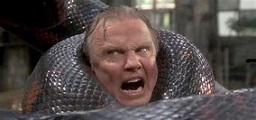
Download Instrumental This poor sucker in the photo above is in a world of hurt. If you’ve ever been in a relationship where you wanted OUT but just couldn’t get away, you know how he feels – minus the slithery scales, of course.
“You’ve Really Got a Hold on Me” was indeed one of my favorites in the “early Beatles” days. It had a solid beat and not a lot of instrumentation – simplicity at its best. Just drums, bass, piano and one guitar was quite enough, thank you.. It was Lennon’s lead vocals and the great backup harmonies that carried the day on this one. The opposite polarity of the lyrics was pretty cool too. “I don’t like you – but I love you” is a good example. Then there’s “You treat me badly – I love you madly”. And the ever popular “I wanna split now – I just can’t quit now”. Clearly a man with an Anaconda wrapped around his neck.
The great Smokey Robinson wrote this tune in his hotel room while in New York in 1964. He was there to negotiate a record deal and things weren’t going very well. His mood might explain the negative sentiment throughout the lyrics: “I don’t want you – but I need you”. The Beatles covered it later the same year, upping the tempo and taking away some of the “Motown” influence. Both renditions are classic but we always chose to go with the Fab Four version – mostly because of the tempo. Throw this one in your repertoire and watch your audience respond – you’ll be glad you did.
Download Instrumental Who would have ever thought The Beatles would record this song – and so early in their career? Well, actually, early in their career all they were doing was covering other peoples’ songs. But this one was a far cry from their usual up-tempo rock’n’roll mania. Guess they were getting in touch with their “feminine side” (can I say that?).
“Til There Was You” was written in 1957 for the Broadway musical The Music Man. Paul McCartney loved show tunes (who knew?) and specifically wanted this one in their repertoire. Paul was partial to Peggy Lee’s version of the tune, and if you listen carefully to each rendition you realize that Paul copied her vocal inflections almost exactly. Even George Harrison’s guitar licks mimic Lee’s orchestral arrangement. Quite an interesting choice for our boys from Liverpool way back when.
Their first appearance on The Ed Sullivan Show was on Feb 9th, 1964. “Til There Was You” was the second of the five songs they performed that night. Of course, the screaming fans pretty much drowned out everything they did, but this little love song managed to punch through all the chaos and show the versatility of this strange British band. Paul wanted it in the set in order to appeal to the older American audience. Didn’t work in my house. All my parents saw was “the hair”. Naturally, I wanted to don that Beatles hairstyle as well, but you can imagine how that went down.
So work this one up (using these backups if you like – I don’t mind) and insert it right smack dab in the middle of your wildest set. They’ll love the contrast – you might even appeal to the older crowd.
Take a listen to Peggy Lee’s version that so influenced McCartney:
Download Instrumental This song is just a little bit strange. It has no chorus and no bridge. It’s just four verses all in a tight little roll. But it works – primarily because of the ethereal quality of the guitars. Because it is so repetitive, I felt compelled to add strings toward the end just to give it a little “omph”. If you use these backup tracks onstage, you’ll appreciate the extra instrumentation.
“Hello darkness, my old friend, I’ve come to talk with you again”. The first line sets the tone for this 1964 hit by Simon and Garfunkel. Paul Simon wrote “Sound of Silence” as a symbol of man’s lack of communication with his fellow man. “People talking without speaking/People listening without hearing”. This song just might be more relevant now than it was in the sixties. “People writing songs that voices never share/ And no one dared – disturb the sound… of silence”. Pretty heavy stuff there, folks. Not what you’d want to trot out in your raucous third set. Maybe the last song of the night, if you’re feeling particularly morose. Send ’em home in a bad mood, I always say.
Simon and Garfunkel first recorded “Sound of Silence” with acoustic guitars, but it failed miserably. I think they sold maybe a couple thousand copies at the most. The boys split up after that, thinking it was over. But Columbia Records had other ideas. They took the original recording to the studio, added electric instruments to the track, and released it as a single. It became a huge hit and our heroes got back together again. Just think, if the studio hadn’t remixed it with electric guitars, we would never have had “Bridge Over Troubled Waters”. Now, there’s sobering thought.
Download Instrumental There are some songs that are just a joy for an old piano player like me. This is one of those tunes. For one thing, there are only two chords, so you don’t have to think too much. And if the piano sets the groove, all you have to do is have fun with it. “Feelin’ Alright” can be played without any concentration whatsoever – until the solo comes around. Then, you better pay attention and look like you know what you’re doing. And stand up – you can’t do this one sitting down.
Dave Mason, guitarist for the English rock group Traffic, wrote this gem in 1968. A word to the wise – don’t do Mason’s rendition, even though it’s the original. It’s boring, slow, and uninspiring. Mr. Joe Cocker came along a year later and did it right. Cocker made a career out of singing other artists’ songs. “You Are So Beautiful” and “With a Little Help From My Friends” come to mind. When he had a hit with another Beatles tune “She Came In Through the Bathroom Window”, I pretty much wrote him off. He was erratic and confusing onstage and I just didn’t like his whole persona. But Joe nailed this one, and I had huge fun with his version through the 80’s and 90’s.
Joe Cocker died in 2014 and I still mourn his loss – mostly because of this song that I so enjoyed performing. Whenever we do this one, I give Joe his appropriate accolades. It’s the least I can do for an old rocker who was one crazy SOB onstage.

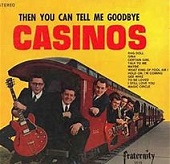 Download Instrumental A hit for “The Casinos” in 1967. Oddly enough, they were a nine man group and it took them nine years to have success with this tune.






 Stageworthy Backing Tracks by Dave Zobrist